

A sub-broker’s desk gets an enquiry from a Facebook ad at 11:03 AM. If nobody calls that lead within the next few minutes, the chance of ever opening that demat account drops sharply. This is the daily reality for stock broking and fintech telecalling teams – leads arrive fast, interest cools fast, and spreadsheets simply cannot keep up.
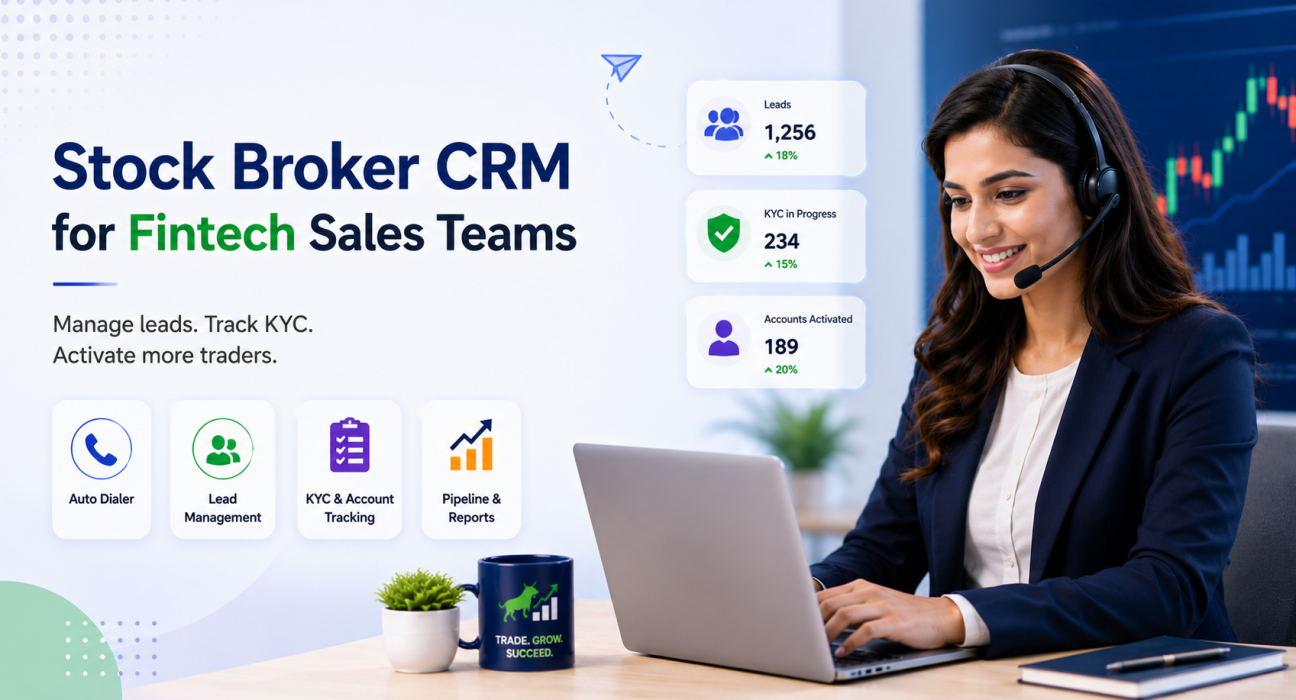
This is exactly the gap a dedicated stock broker CRM is built to close – combining an auto dialer, structured lead tracking and KYC-stage pipelines so telecalling teams in broking and wider fintech businesses can respond faster and lose fewer leads.
This guide explains what a stock broker CRM actually does, how it fits into the broader fintech telecalling process, and how broking, lending and insurance telesales teams can use one without turning it into another tool nobody adopts.
What Is a Stock Broker CRM?
A stock broker CRM is telecalling software built for how broking and fintech sales teams actually work: capturing enquiries from ads and portals, auto-dialing them before interest fades, and tracking each lead through account opening, KYC and activation instead of a generic sales stage.
Unlike a general-purpose CRM, it is organized around the calling workflow first – dialer, disposition, follow-up – rather than around emails or deal notes alone.
Why Fintech and Broking Telecalling Is Different
Fintech sales, and stock broking in particular, involve a longer and more regulated conversion path than most other industries. A lead does not become a customer after one call – it moves through several distinct stages, each with its own drop-off risk:
- Enquiry to contact: Leads from ads and portals need to be called within minutes, not hours, or interest cools.
- Contact to KYC: Prospects agree verbally but stall on document submission.
- KYC to activation: An account is opened but the client never places a first trade.
- Activation to retention: Active traders go quiet and become dormant accounts.
A spreadsheet or a generic CRM can record that a lead exists. It cannot tell a manager, at a glance, how many accounts are stuck at KYC this week, or which source is producing leads that actually start trading. That distinction is what a telecalling CRM built for this workflow is meant to solve.
Core Capabilities a Stock Broker CRM Should Have
1. Auto Dialer for Faster First Contact
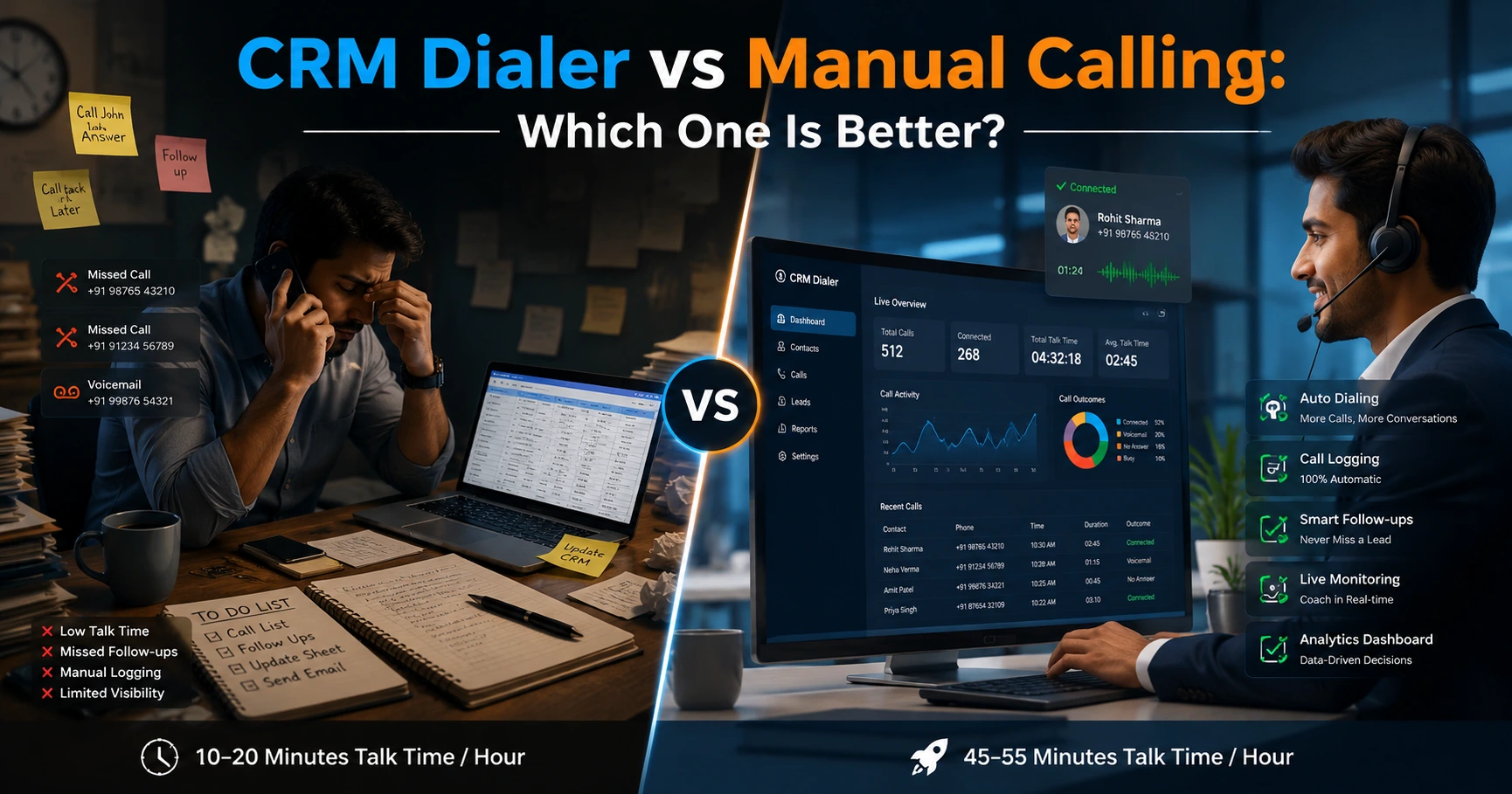
Manual dialing wastes agent time between calls and delays outreach on fresh leads. An auto dialer queues the next lead automatically, captures call duration from the phone log, and skips numbers on the Do Not Call list. Given how fast broking leads go cold, speed to first call is often the single biggest lever a team has.
2. Lead Management With De-duplication
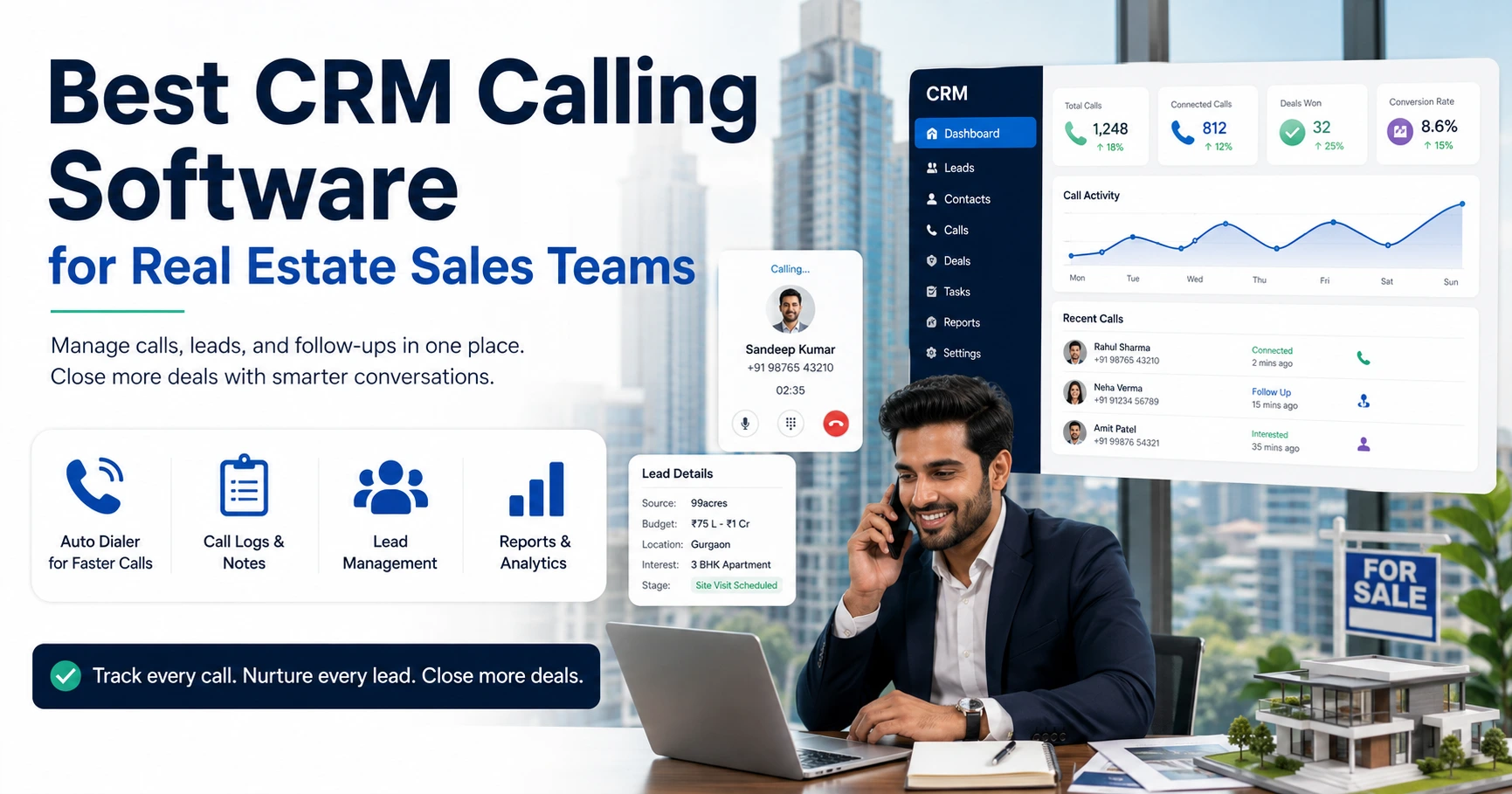
Enquiries typically arrive from several sources at once – Facebook and Google ad forms, the company website, and referrals. Without automatic de-duplication and assignment, the same lead can get called twice by different agents, or worse, not called at all because it sat unassigned. Good lead management software routes new leads to an agent within seconds of arrival.
3. Pipeline Stages That Match Broking Workflows
Instead of a generic “New – Qualified – Won” pipeline, a stock broker CRM should track stages that mirror how broking accounts actually progress:
| Stage | What It Represents |
|---|---|
| Lead | New enquiry, not yet contacted |
| Contacted | First call made, interest gauged |
| Account Opening / KYC | Documents collected, KYC in progress |
| Activated | Demat/trading account is live |
| Trading | Client has placed at least one trade |
| Dormant / Lost | Account inactive or enquiry did not convert |
Seeing pipeline value at each stage – not just lead counts – helps a sales head answer a simple but important question: how much account-opening business is currently open, and how much has actually converted to a funded, trading account.
4. Lead Fields Specific to Broking
Generic CRM fields (name, phone, notes) are not enough for broking telesales. Agents typically need to capture:
- Trading segment (Equity, F&O, Commodity)
- Investment capital
- KYC status
- Existing broker, if any
- City and lead source
Capturing this consistently on every call means a manager can later filter and report – for example, seeing which segment or lead source produces the highest activation rate.
5. Follow-Up Scheduling and Reminders
Broking prospects rarely convert on the first call. They ask for time to think, to compare brokers, or to arrange funds. Smart follow-up scheduling with automatic reminders and overdue alerts is what prevents these half-warm leads from being forgotten – this applies to any telecaller CRM, not just broking-specific ones.
6. Live Team Visibility
A real-time view of who is on a call, who is idle, and how many leads are pending helps floor managers coach in the moment rather than reviewing a report the next day. For broking desks with multiple sub-broker teams, this kind of visibility also supports fair lead distribution and accountability.
Real-World Use Cases
These are illustrative examples of how broking and fintech telesales teams typically apply this kind of software – not claims about any specific customer.
Sub-broker account-opening desks. A sub-broker running Facebook and Google ad campaigns can connect leads directly into the CRM, have the auto dialer call fresh enquiries immediately, and track which source produces the highest KYC completion rate.
Activation desks. Once an account is opened, activation calling – reminding new clients to fund their account and place their first trade – reduces the number of accounts that stay dormant after opening.
Win-back campaigns. Brokers can upload a list of dormant accounts and run a targeted outbound campaign, using call outcomes to identify which clients are open to re-engaging.
Broader fintech parallels. The same structured-calling logic applies beyond broking. A lending fintech might track applicants through “KYC Started → KYC Done → Disbursed,” while an insurance telecalling team tracks “Enquiry → Quote Shared → Policy Issued.” The pipeline stages differ, but the underlying need – fast first contact, no lost leads, visible follow-ups – is the same across fintech verticals.
Benefits of Using a Stock Broker CRM
- Faster response time to new enquiries, when interest is highest
- Fewer lost leads through automatic de-duplication and assignment
- Clearer visibility into where accounts are stuck – contact, KYC, or activation
- Better follow-up discipline through reminders instead of memory or sticky notes
- More accurate reporting on which lead sources actually convert to funded, trading accounts
Common Mistakes to Avoid
- Treating it as a generic CRM. If the pipeline stages don’t reflect account opening and KYC, agents will end up tracking the real status in a separate spreadsheet anyway.
- Ignoring DNC and consent rules. Outbound calling in India is governed by TRAI’s National Customer Preference Register (formerly the National Do Not Call Registry), which gives consumers a way to limit the telemarketing calls they receive, and requires telemarketers to register before accessing it. A CRM that skips DNC numbers automatically reduces this compliance risk.
- Skipping follow-up reminders. Broking leads that “said call back next week” are the easiest to lose without a system-driven reminder.
- Not tracking activation, only account opening. An opened account that never trades is not a real conversion – activation stages need to be tracked separately.
- Overloading agents with data entry. If logging a call outcome takes too many steps, agents skip it, and the reporting becomes unreliable.
How TeleCalling CRM Supports Stock Broking and Fintech Teams
TeleCalling CRM offers a pipeline built around the account-opening and KYC workflow described above – covering Lead, Contacted, Account Opening / KYC, Activated, Trading and Dormant / Lost stages, along with segment, capital and KYC-status fields specific to broking. It also connects with website forms, Facebook and Google ad leads, and Google Sheets, and includes the auto dialer, follow-up reminders and live team reporting features covered in this guide. Plans and full feature details are available on the pricing page.
The tool matters less than the process, though. Even without any specific software, a broking or fintech telesales team that calls leads fast, tracks KYC stage by stage, and follows up on schedule will out-convert a team relying on spreadsheets and memory.
FAQs
What is a stock broker CRM? A stock broker CRM is telecalling software designed for broking sales teams. It manages leads from ads and portals, auto-dials them, and tracks each prospect through account opening, KYC and activation instead of a generic sales pipeline.
Do I need a CRM specifically for stock broking, or will any CRM work? A general CRM can store contact details, but it usually lacks pipeline stages for KYC and account activation, and lacks an auto dialer built for high call volumes. A CRM built for broking saves time that would otherwise go into customizing a generic tool.
Can a stock broker CRM track KYC status? Yes, if it is built for the industry. Look for a pipeline that separates “Account Opening / KYC” from “Activated,” so you can see exactly where each lead is stuck.
How does an auto dialer help a broking telecalling team? An auto dialer queues the next lead automatically instead of agents dialing manually, captures call duration, and skips numbers on the Do Not Call list – reducing idle time between calls and improving speed to first contact.
Is this type of CRM only useful for stock brokers, or also for other fintech businesses? The same structured-calling approach applies across fintech – lending, insurance, and payments teams all benefit from fast first contact, stage-based pipelines and automatic follow-up reminders, even though their specific stages differ from broking.
What lead sources typically feed a stock broker CRM? Common sources include Facebook and Google ad leads, website enquiry forms, referrals, and manually imported lists via Google Sheets or CSV.
Conclusion
Stock broking and fintech telecalling both run on the same fundamentals: contact leads fast, track them through a process with real stages, and never let a follow-up slip. A Stock Broker CRM makes this process visible and repeatable instead of dependent on individual agents remembering who to call back. Whether the goal is opening more demat accounts, completing more KYC applications, or activating dormant traders, the right structure-not just the right software-is what moves the needle