

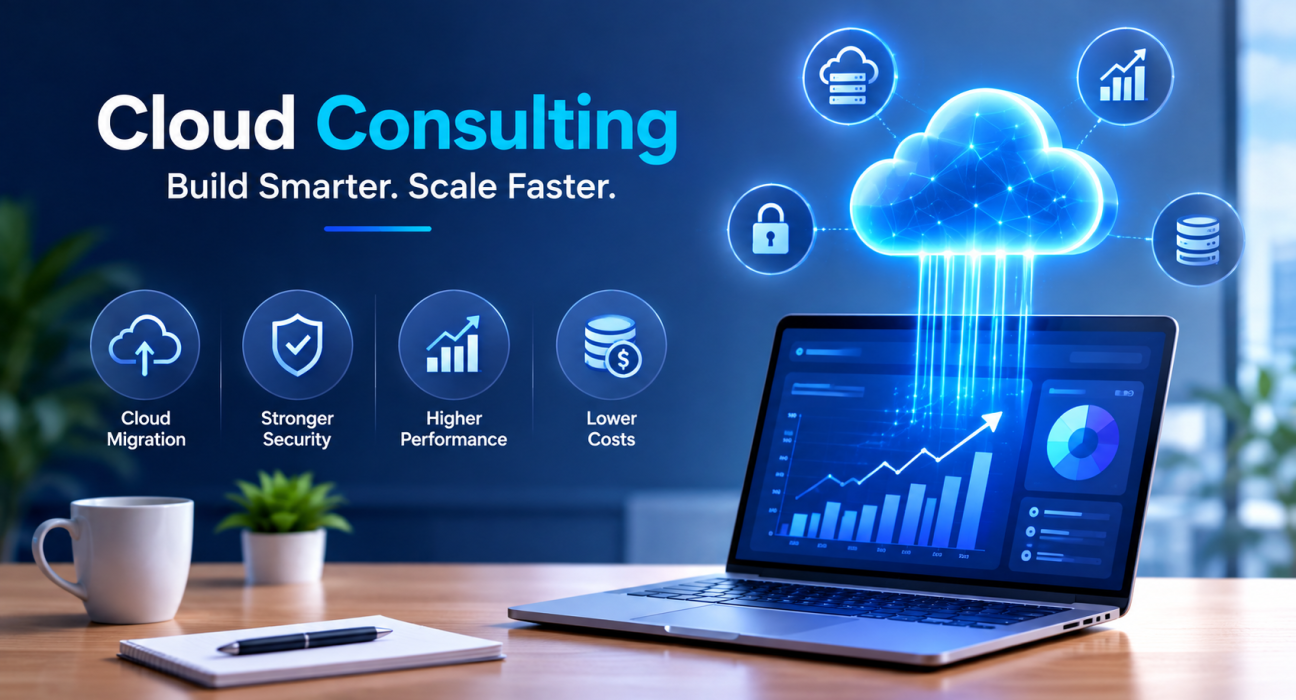
Moving to the cloud sounds simple until you actually try to do it. Which provider do you choose? How do you migrate without breaking existing systems? How do you control costs once everything is running? This is where cloud consulting comes in.
Cloud consulting is a professional advisory and implementation service that helps businesses plan, migrate, manage, and optimize their use of cloud computing platforms such as AWS, Microsoft Azure, and Google Cloud. Instead of guessing your way through cloud adoption, a specialist brings the technical expertise and strategic planning needed to do it correctly the first time.
For startups scaling fast, enterprises modernizing legacy systems, or SMBs trying to cut IT costs, this kind of support can be the difference between a smooth transition and an expensive, disruptive one. This article breaks down what cloud consulting actually involves, when businesses need it, what the process looks like, and how to choose the right technology partner.
What Is Cloud Consulting?
Cloud consulting is the practice of helping organizations design, build, migrate, and manage their infrastructure and applications on cloud platforms. A cloud consultant or advisory firm typically combines technical engineering skills with business strategy, since these decisions usually affect cost structures, security posture, and long-term scalability, not just IT operations.
This type of engagement can cover a wide range of services, including:
- Cloud readiness assessments
- Cloud migration planning and execution
- Cloud architecture design
- Multi-cloud and hybrid cloud strategy
- Cost optimization (often called FinOps)
- Security and compliance guidance
- DevOps and automation setup
- Ongoing cloud management and support
The scope depends on the business. Some companies only need help with a one-time migration. Others bring in a cloud consultant for continuous architecture reviews, security audits, or cost management as their infrastructure grows.
Why Do Businesses Need Cloud Consulting?
Most businesses don’t lack the desire to use cloud technology. They lack the internal expertise to do it efficiently. Cloud platforms are powerful, but they’re also complex, and mistakes can be costly.
Common Problems a Cloud Consulting Partner Solves
Unclear migration path. Many businesses know they should move to the cloud but aren’t sure how to do it without downtime or data loss.
Rising cloud costs. It’s common for companies to overprovision cloud resources or leave unused services running, leading to bills that grow faster than expected.
Security and compliance gaps. Industries like healthcare, finance, and e-commerce have specific compliance requirements (HIPAA, PCI-DSS, GDPR) that require careful cloud configuration.
Legacy system limitations. Older, on-premises systems often can’t scale or integrate well with modern tools, which slows down growth.
Lack of in-house cloud expertise. Hiring and retaining full-time cloud architects and engineers is expensive, especially for SMBs and early-stage startups.
A specialist addresses these issues with structured planning instead of trial and error, which reduces both risk and cost over time.
What Does a Cloud Consulting Partner Actually Do?
A specialist’s day-to-day work varies depending on the project stage, but the core responsibilities generally include the following.
1. Assessing current infrastructure
Before recommending anything, the team reviews existing systems, applications, and data to understand what can be migrated as-is, what needs to be modified, and what should be rebuilt entirely.
2. Designing a cloud strategy
This includes choosing the right cloud model (public, private, or hybrid), selecting a provider or combination of providers, and mapping out an architecture that fits the business’s performance, security, and budget needs.
3. Planning and executing migration
Migration is typically phased to reduce risk. A consultant will prioritize which applications move first, plan for minimal downtime, and test thoroughly before a full cutover.
4. Optimizing cost and performance
After migration, consultants often monitor usage patterns to right-size resources, eliminate waste, and recommend pricing models (like reserved instances or spot instances) that reduce costs without hurting performance.
5. Strengthening security and compliance
Cloud consultants configure identity and access management, encryption, network security, and compliance controls appropriate to the industry the business operates in.
6. Enabling automation and DevOps
Many consulting engagements include setting up CI/CD pipelines, infrastructure as code, and monitoring tools so the business can manage its cloud environment more efficiently going forward.
Types of Cloud Consulting Services
Not all engagements look the same. Here’s how they generally break down.
| Service Type | Best For | What It Involves |
|---|---|---|
| Cloud Migration Consulting | Businesses moving from on-premises to cloud | Assessment, migration planning, execution, testing |
| Cloud Architecture Consulting | Businesses building new cloud-native systems | Infrastructure design, scalability planning |
| Cloud Security Consulting | Regulated industries, security-sensitive businesses | Access control, compliance, risk assessment |
| Cloud Cost Optimization (FinOps) | Businesses with growing cloud bills | Usage analysis, resource right-sizing, budgeting |
| Managed Cloud Services | Businesses without an internal cloud team | Ongoing monitoring, maintenance, support |
| Multi-Cloud/Hybrid Cloud Consulting | Enterprises using multiple providers | Integration strategy, vendor management |
Businesses often start with one type of engagement, such as migration, and later expand into ongoing managed services once their cloud environment is established. Browsing a directory of IT service providers can help you see which firms specialize in each area before you commit to one.
How Cloud Consulting Helps Businesses: Key Benefits
Reduced operational costs
Well-architected cloud environments avoid the common trap of overpaying for unused or mismatched resources. Consultants identify where spending can be trimmed without affecting performance.
Faster time to market
Cloud infrastructure lets businesses deploy new features and products faster, since teams aren’t waiting on physical hardware provisioning. Consultants help set up the automation that makes this speed possible.
Improved scalability
Cloud-native architecture allows businesses to scale resources up or down based on demand, which is especially valuable for seasonal businesses or companies expecting rapid growth.
Stronger security posture
Cloud consultants configure environments according to security best practices and relevant compliance frameworks, reducing the risk of breaches or regulatory penalties.
Access to specialized expertise
Instead of hiring a full internal cloud team, businesses can bring in consultants with deep, current knowledge of specific platforms and best practices.
Better business continuity
Cloud infrastructure, when set up correctly, supports stronger disaster recovery and backup strategies than most traditional on-premises setups.
When Should a Business Hire a Cloud Consulting Partner?
Not every business needs outside help immediately, but certain signals suggest it’s time to bring in a specialist.
- You’re planning to migrate from on-premises servers to the cloud
- Your cloud costs are increasing without a clear explanation
- You’re expanding into new markets with compliance requirements
- Your engineering team lacks cloud architecture experience
- You’re preparing for a product launch that requires scalable infrastructure
- You’ve experienced downtime, security incidents, or performance issues
- You’re evaluating a multi-cloud or hybrid cloud strategy
If two or more of these apply, bringing in outside expertise is generally worth exploring.
How to Choose the Right Cloud Consulting Partner
Selecting a firm is a significant decision, since the quality of the engagement directly affects your infrastructure’s performance, security, and cost. Consider the following factors.
1. Platform expertise
Confirm the consultant has verified experience and certifications on the specific cloud platform you’re using or considering, whether that’s AWS, Azure, or Google Cloud.
2. Industry experience
A consultant familiar with your industry’s compliance and operational requirements will move faster and avoid preventable mistakes.
3. Migration track record
Ask about past migration projects, especially ones similar in scale and complexity to your own.
4. Post-migration support
Clarify whether the engagement ends after migration or includes ongoing management, monitoring, and optimization.
5. Transparent pricing
Cloud consulting pricing models vary widely, from fixed-project fees to hourly rates to ongoing retainers. Make sure the pricing structure fits your budget and project scope.
Businesses that aren’t sure where to start can use a platform like GoFirms to research and compare technology and IT service providers based on their services, specialization, and focus areas. This can make it easier to shortlist companies before reaching out for proposals.
Cloud Consulting Costs: What to Expect
Pricing varies significantly based on project scope, complexity, and the firm’s location and experience level. Common pricing models include:
- Hourly consulting rates – typical for smaller advisory engagements or audits
- Fixed-price projects – common for well-defined migrations with a clear scope
- Monthly retainers – used for ongoing managed cloud services
- Percentage of cloud spend – sometimes used for cost-optimization engagements
Exact pricing depends on your region, the provider you choose, and the scale of your infrastructure, so it’s best to request detailed quotes from a few consulting firms before committing.
Frequently Asked Questions
What is cloud consulting in simple terms? Cloud consulting is a service where experts help businesses plan, migrate, and manage their systems on cloud platforms like AWS, Azure, or Google Cloud. It covers strategy, migration, security, and ongoing optimization to help businesses use cloud technology effectively.
How much does cloud consulting cost? Costs vary based on project scope, provider, and consulting firm. Pricing models include hourly rates, fixed-project fees, and monthly retainers. Small advisory projects may cost less than large-scale migrations, so it’s best to get custom quotes based on your specific needs.
How long does a cloud migration take? Migration timelines depend on the size and complexity of the existing infrastructure. Simple migrations may take a few weeks, while large enterprise migrations with multiple applications can take several months when done in phases to reduce risk.
Do small businesses need cloud consulting? Small businesses can benefit from this kind of support, especially when they lack in-house cloud expertise or are experiencing rising costs, security concerns, or scalability limitations. Even a short engagement can prevent costly configuration mistakes.
What’s the difference between cloud consulting and managed cloud services? It typically focuses on strategy, architecture, and migration, often as a project-based engagement. Managed cloud services involve ongoing monitoring, maintenance, and support after the initial setup is complete.
Is cloud consulting only for large enterprises? No. It’s used by startups, SMBs, and enterprises alike. The scope and cost of the engagement typically scale with the size and complexity of the business’s infrastructure needs.
How do I find a reliable cloud consulting company? Look for verified platform certifications, relevant industry experience, and a clear migration track record. A technology company directory can help you research and compare IT service providers based on their focus areas before requesting proposals.
Final Thoughts
Cloud consulting exists to remove the guesswork from one of the most important technical decisions a business can make. Whether you’re migrating legacy systems, trying to control cloud costs, or building a scalable architecture from scratch, the right consulting partner brings the technical expertise and strategic planning to get it right the first time.
Before choosing a provider, take the time to assess your business’s specific needs, whether that’s migration, security, cost optimization, or ongoing management, and match those needs to a specialist’s actual experience. Businesses that want a starting point can use GoFirms’ provider directory to compare relevant firms, making it easier to find a partner suited to their industry and technical requirements.