


You know that feeling when you open a closet and something falls out that you forgot you owned?
Or when you’re looking for space to put something new and realize half your storage is filled with things you haven’t touched in months?
That camera you upgraded from two years ago. The textbooks from a course you finished. The furniture that didn’t make it to the new apartment. The gaming console you replaced. The fitness equipment from your ambitious phase.
All of it sitting there. Taking up space. Gathering dust. Losing value.
You know you should sell it. You’ve thought about it multiple times. But somehow, it never happens.
It’s not that you’re attached to these things. You genuinely don’t need them anymore. It’s just that selling them feels like more trouble than it’s worth.
Until you realize how much that thinking actually costs you.
Sympl is built on a simple idea: selling your old stuff locally shouldn’t require more effort than deciding you don’t want it anymore.
What Unused Stuff Actually Costs You
Let’s talk about the real price of keeping things you don’t use.
The obvious cost is money. That laptop worth fifteen thousand is sitting in a drawer instead of being cash in your account. Those books worth three thousand are on a shelf you never look at. The bike worth eight thousand is in storage, rusting slowly.
Add it up. The stuff you’re not using probably represents tens of thousands of rupees. Money you could have. Money you’re choosing not to have by not selling.
But money isn’t the only cost.
There’s space. That shelf holding textbooks you’ll never open again could hold things you actually use. That corner with the old furniture could be clear, making the room feel bigger. The storage area filled with unused sports equipment could be organized and functional.
Space in cities is expensive. You’re essentially paying rent for things you don’t even want.
There’s mental clutter too. Every time you see that unused treadmill, there’s a tiny guilt ping. “I should sell that.” Every time you move that box of old electronics to get to something else, there’s frustration. “Why am I still keeping this?”
These micro-frustrations add up. They’re not crushing, but they’re constant. Your environment affects your mental state more than you realize.
And there’s opportunity cost. While that old phone sits unused, someone else is paying full price for a new one when yours would have worked perfectly for them. While your books gather dust, a student is struggling to afford the same titles. While your furniture takes up space, someone else is furnishing their first place with whatever they can afford.
Keeping unused things doesn’t just cost you. It creates inefficiency in the whole system.
Why Most Platforms Make Selling Harder Than It Should Be
The theoretical path to selling your stuff is simple. Take a photo, write a description, post it online, wait for a buyer, meet up, exchange items for money. Done.
But platforms have turned this into something else entirely.
First, there’s the setup barrier. Create an account. Verify your phone number. Sometimes verify your email too. Set up a profile. Add a photo. Answer security questions. Agree to terms and conditions you won’t read.
You haven’t even gotten to listing your item yet.
Then comes the listing process. Choose from a maze of categories and subcategories. Fill in required fields. Add optional fields the platform really wants you to fill. Upload photos but not too many, and not too few, and they should be good quality but under a certain file size.
Write a description. How long? What should you include? What keywords should you use to make sure people find it?
Set a price. But wait, should you check what similar items are selling for? Should you price slightly lower to attract buyers faster? Should you leave room for negotiation?
Now you’re finally ready to post. But the platform suggests you boost your listing for better visibility. Should you? How much does that cost? Is it worth it?
Your listing goes live. Now you wait. And wait. And check your phone. And wait some more.
When messages finally come, half of them are lowball offers. Some are questions you already answered in the description. Some are from people who clearly won’t follow through.
You coordinate a meetup. The person doesn’t show up. You coordinate another. They show up but want to negotiate down significantly. Finally, maybe, after days or weeks, you complete the sale.
By the time it’s done, you’re exhausted. And you still have three other items to sell.
No wonder people give up.
How Sympl Removes the Friction
Sympl looks at that entire process and asks a different question: what if we removed everything that doesn’t absolutely need to be there?
Minimal setup. You don’t need a profile. You don’t need verification steps. You just start posting.
Simple listings. Category, title, price, description, photos. That’s it. No required fields that don’t matter. No optional fields tempting you to overthink.
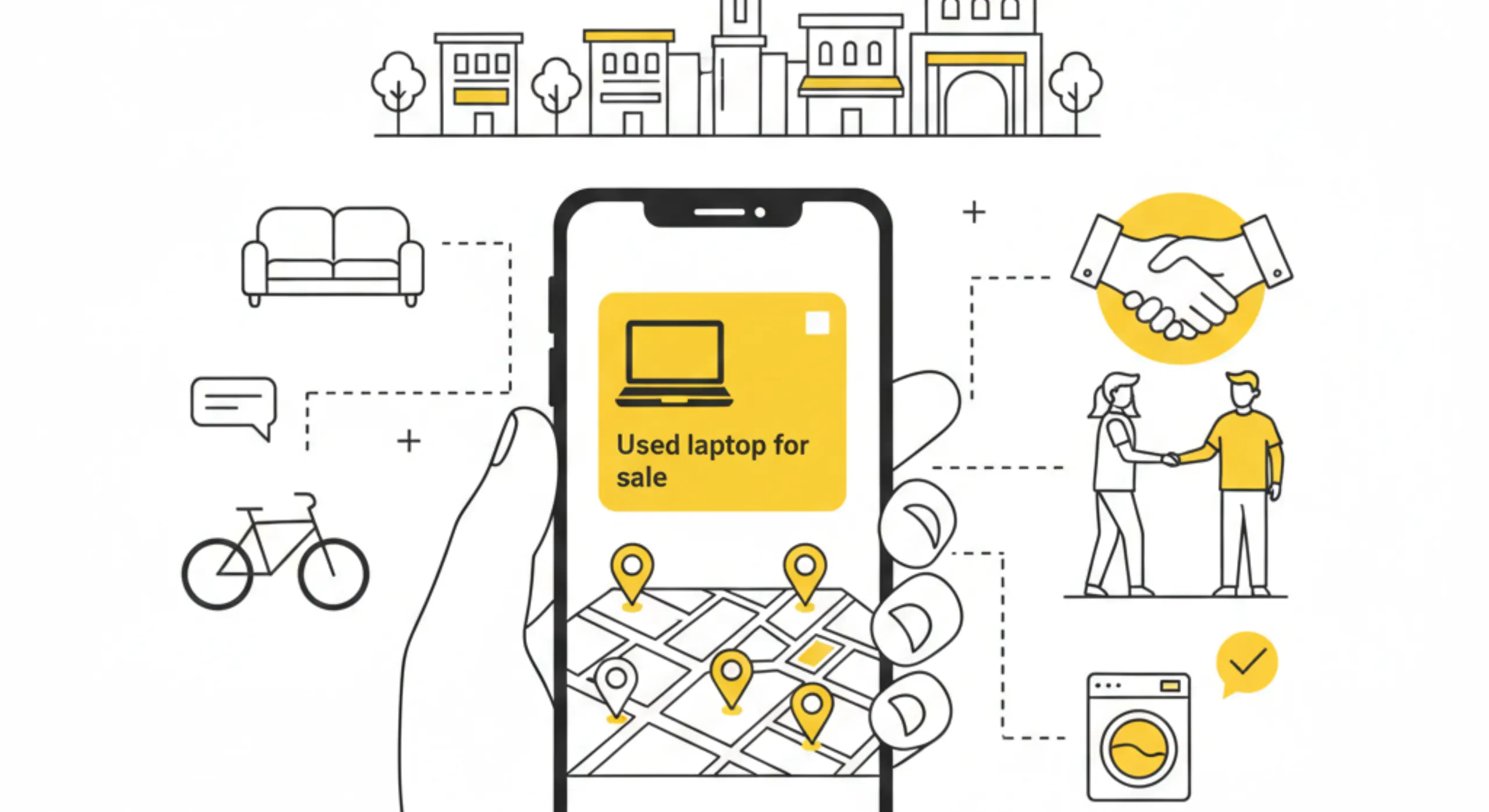
Local by default. Your listing shows up for people in your city. Not the entire country. Not filtered by algorithm. Just nearby people who could actually buy it.
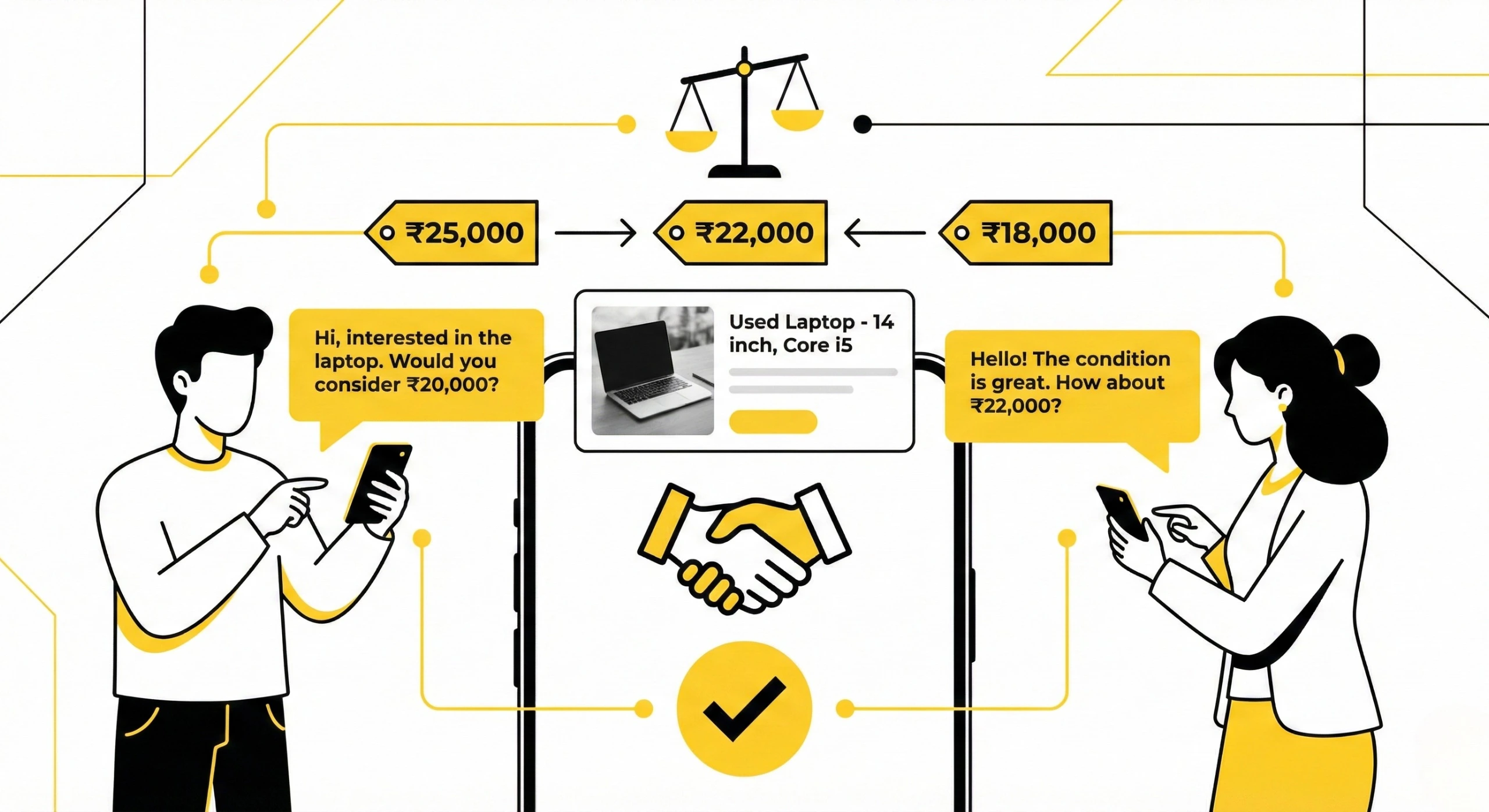
Direct communication. Someone’s interested? They message you. You reply. You both figure out when and where to meet. No platform intermediary. No approval workflows.
No upsells. There’s no premium tier. No boost options. No features you’re supposed to want. Your listing gets the same treatment as everyone else’s.
The result is a platform that gets out of your way. It connects you with local buyers and then lets you handle the transaction like two reasonable adults.
That’s not revolutionary. It’s just respectful of your time.
The Power of Staying Local
National platforms promise reach. List once, potential buyers everywhere. Sounds good in theory.
In practice, it creates problems.
Someone from another city messages you about your sofa. They’re “very interested” and ask if you ship. Shipping a sofa costs almost as much as the sofa itself, and the logistics are complicated. Conversation dies.
Someone three states away asks about your bike. They want you to pack it, take it to a courier service, arrange shipping, and hope it arrives undamaged. You’re not set up for that. You’re not a business. You’re just someone selling a bike.
Someone far away makes an offer but then ghosts. Were they ever serious? You’ll never know. They had no real intention of following through because they were nowhere near you anyway.
All of this wastes your time.
Local changes everything.
When someone in your city messages you, they can come see the item tomorrow. If they’re serious, the transaction happens fast. If they’re not, you find out quickly and move on.
There’s no shipping discussion because there’s no shipping needed. You meet at a coffee shop, a metro station, or a park. Somewhere convenient for both of you. They inspect the item. If they like it, they buy it. If not, you both move on with your day.
Local buyers are higher quality leads. They’re not browsing casually from across the country. They’re actively looking for something in their city that they can pick up soon.
The logistics are simpler too. Heavy furniture? No problem, they’ll bring someone with a vehicle. Large appliances? They’ll figure out transport. Electronics? Easy to carry. None of this requires shipping companies or complicated coordination.
And there’s built-in accountability. You’re both in the same city. If something goes wrong, there’s recourse. In practice, this means things rarely go wrong because both people know it’s a real, local transaction.
Sympl focuses entirely on local because local is where secondhand transactions actually work smoothly.
What People Successfully Sell Locally
Walk through what actually moves quickly in local secondhand markets.
Electronics that work fine but got upgraded. Phones, laptops, tablets, smartwatches, earbuds, cameras. Tech moves fast. What was flagship two years ago is mid-range now, but it’s still perfectly functional for someone who doesn’t need the latest specs.
Furniture from life transitions. Got a bigger place, smaller place, different aesthetic? The furniture that doesn’t fit your new life is exactly what someone else needs for theirs. Desks, chairs, tables, beds, shelves, storage units all of it has a second life.
Study materials with short useful lives. Textbooks for courses you finished. Guides for exams you passed. Reference materials for certifications you earned. These have intense value for a short window, then none. Passing them on makes perfect sense.
Kids’ items with built-in obsolescence. Children outgrow things at absurd rates. Clothes, toys, books, strollers, car seats, high chairs. Buying these new things is expensive. Buying used is smart because you know they’ll be outgrown soon anyway.
Hobby equipment from changing interests. Musical instruments you don’t play anymore. Art supplies from a phase that passed. Camping gear you used once. Photography equipment from when you were learning. Cooking gadgets you experimented with. None of it is wrong to have bought interests change, and the gear finds new homes.
Sports and fitness equipment from shifting routines. Gym equipment, yoga mats, running gear, bicycles, cricket bats, tennis rackets. Fitness journeys evolve. What worked for you last year might not fit this year’s routine, but someone else is just starting exactly where you were.
Books you’ve finished. Novels you’ve read, non-fiction you’ve absorbed, series you’ve completed. They served their purpose for you. Now they can serve it for someone else.
Appliances from upgrades or redundancy. Got a better coffee maker? The old one still works. Moved in with someone who already has a microwave? Yours is redundant. Upgraded your sound system? The previous one has value.
All of these items share something: they’re worth money, they’re useful, but they’re not useful to you anymore. That makes them perfect for local secondhand sales.
What Buyers Actually Want From Local Deals
People buying secondhand locally aren’t looking for the cheapest possible price. They’re looking for value, convenience, and confidence.
Value means fair pricing. Not necessarily the absolute lowest price, but a price that makes sense given the item’s condition and age. Buyers understand secondhand shouldn’t cost the same as new. They also understand that pristine condition commands are more than heavily used.
Convenience means meeting easily. Buyers want sellers who are responsive and flexible about meetup locations. A seller willing to meet halfway is more attractive than one demanding the buyer comes to them, even if the price is slightly higher.
Confidence means seeing before buying. This is huge. Online shopping is full of disappointing items not as pictured, conditions worse than described, missing pieces. Local buying solves this. You see it, touch it, test it if possible. If it’s not right, you don’t buy it. That confidence is worth something.
Speed matters too. Need a desk for your new apartment this weekend? Finding one locally that you can pick up Saturday beats ordering online and waiting for delivery.
The human element. Buying from a real person you meet is different from buying from a faceless seller. You can ask questions. They can explain quirks or features. There’s trust built through direct interaction.
Sympl facilitates all of this by keeping things local and direct. No algorithm choosing what buyers see. No platform rules about how you communicate. Just two people making a simple exchange that works for both.
Why Some Items Sit Unsold
You’ve listed something and nobody’s biting. Why?
Unrealistic pricing. Check what similar items actually sell for, not what you wish they’d sell for. That laptop might have cost you sixty thousand new three years ago, but the same model sells for twenty thousand today. That’s market reality.
Poor photos. Dark, blurry, or unflattering images make buyers skip your listing. Use natural light. Show the item clearly. Include a photo of any damage or wear so people know what they’re getting.
Vague descriptions. “Good condition” means nothing. “Works perfectly, minor scratches on back, battery lasts 6 hours, comes with original charger” tells the story.
Wrong category or title. If people searching for what you’re selling can’t find your listing, it won’t sell. Use the obvious category. Put the key details in the title.
Being difficult to reach. If you take two days to respond to messages, buyers move on. Quick responses signal you’re serious about selling.
Inflexibility about meetups. “Only available weekdays between 2-3 PM at my house” makes it hard for anyone to actually buy from you. Be reasonable about timing and location.
None of these are complicated fixes. Just basic stuff that helps buyers feel confident about the transaction.
Sympl makes most of this easier by keeping things simple. You’re not competing with professional resellers and stores. You’re just another person selling something locally. Being honest and responsive is enough.
Getting Ready for Sympl
Sympl launches soon with one goal: make local selling actually work for regular people.
No complexity. No features you don’t need. Not trying to be everything to everyone.
Just a straightforward platform connecting people in the same city who want to buy and sell.
When it goes live, you’ll be able to list items in minutes, not hours. Connect with serious local buyers, not time-wasters from across the country. Complete transactions quickly, not after weeks of back-and-forth.
The stuff you’re not using will finally become money in your account and space in your home.
And someone else will get something they need at a price they can afford.
That’s how it should work. That’s how Sympl makes it work.
Your closet has value sitting in it. Time to let that value out.