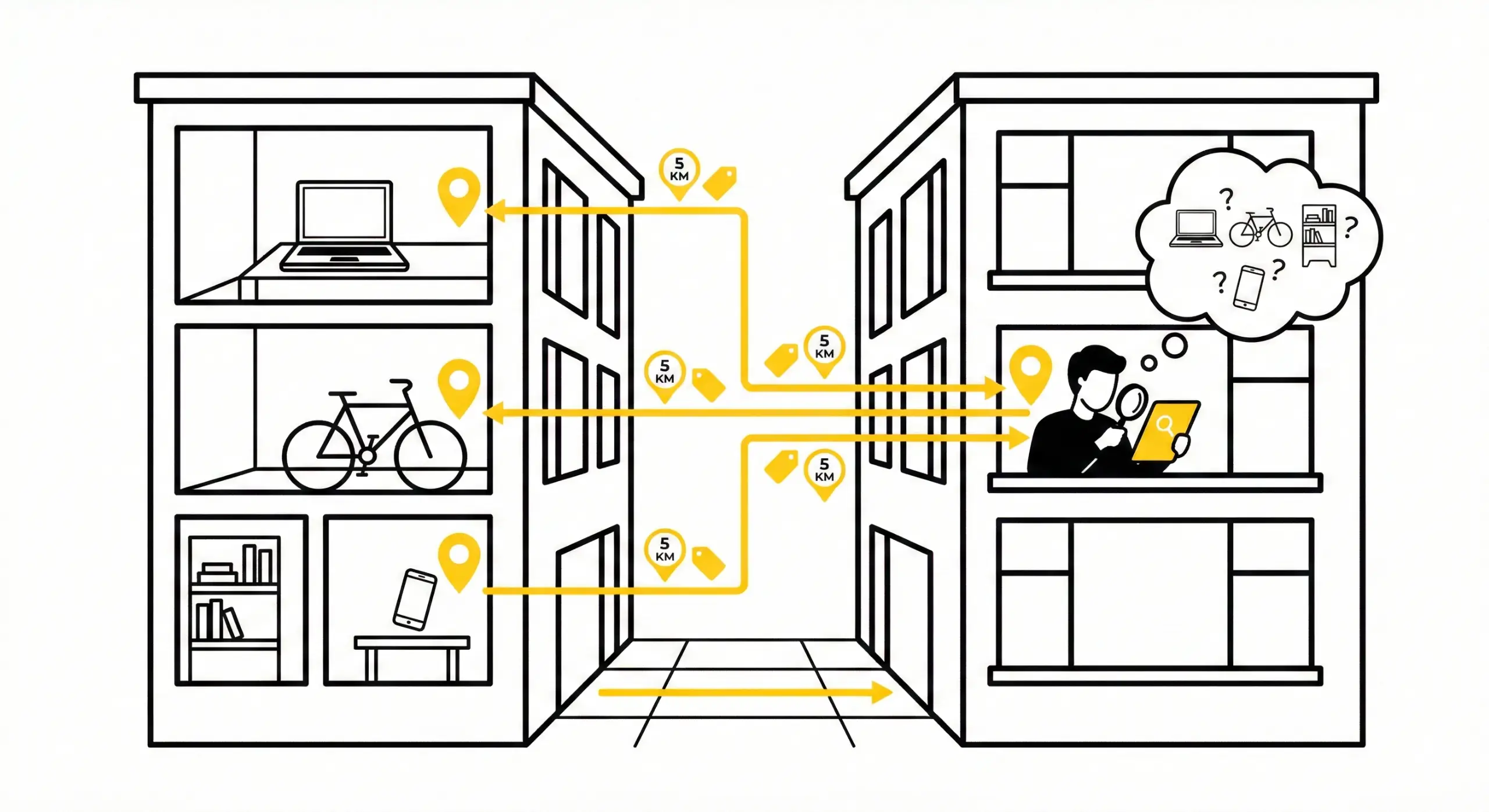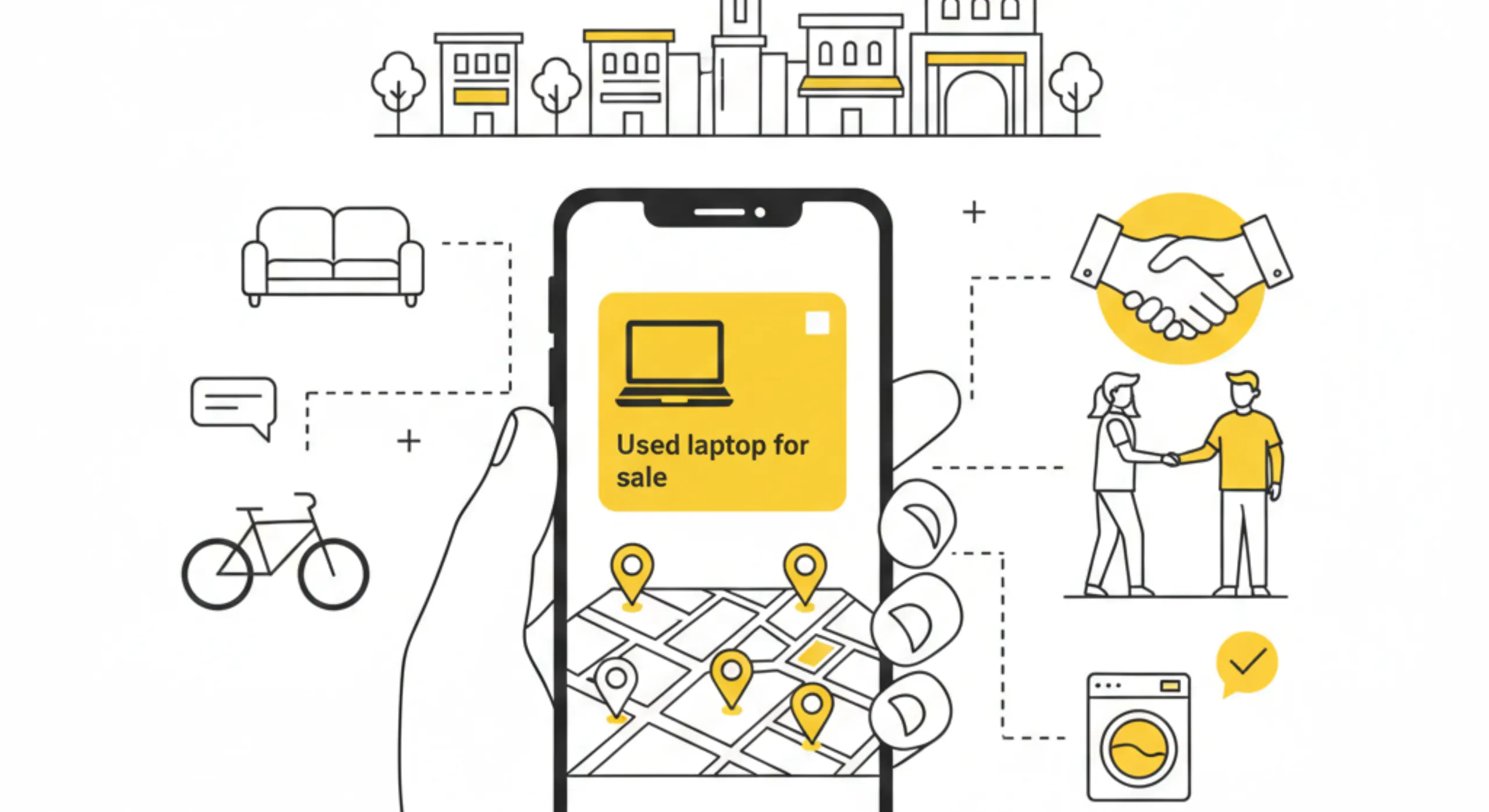



Your grandfather sold his old bicycle by putting up a handwritten sign at the neighborhood tea stall. Your parents used newspaper classifieds. You use apps and websites.
The tools changed, but the basic need stayed the same: connect with someone nearby who wants what you’re selling or has what you need.
Looking ahead, the future of buying and selling in India isn’t about virtual reality showrooms or AI-powered negotiations. It’s about making simple exchanges even simpler, removing friction, reducing costs, and keeping transactions local and direct.
Platforms like Sympl that focus on straightforward local buying and selling are already showing what this future looks like: less complexity, more accessibility, faster connections between real people in the same area.
What’s Actually Changing (And What Isn’t)
Despite all the technology hype, certain fundamentals of everyday commerce haven’t changed and won’t.
People still prefer seeing items before buying:
No amount of 360-degree photos replaces actually touching a sofa or testing a phone screen. Local transactions that allow inspection will always have an advantage.
Trust still comes from transparency:
Whether through a handshake in 1990 or clear photos and honest descriptions in 2026, trust is built the same way through straightforward communication.
Price still matters most:
Budget-conscious buyers will always choose affordable second-hand items over expensive new ones when quality is comparable.
Proximity still saves time and money:
Meeting a seller 10 minutes away beats waiting days for shipping, regardless of how advanced the logistics become.
What’s changing is how easily these connections happen. Technology is removing barriers without changing what people actually want from transactions.
The Shift Away From Complexity
For the past decade, platforms kept adding features ratings, reviews, verified badges, escrow systems, insurance, premium memberships, AI recommendations.
The future is different. People are realizing that most of these features don’t help with simple transactions like selling a study table or buying a used bike.
Simpler interfaces are winning:
Platforms where you can post in under three minutes are attracting more users than ones requiring account verification and mandatory fields.
Direct communication is preferred:
Messaging a seller directly feels more natural than platform-managed communication with templates and restrictions.
Local-first is replacing nationwide:
Instead of searching across India and filtering by location, people want to start with what’s nearby and only expand if needed.
Free is beating paid:
Why pay listing fees or commissions when platforms like Sympl offer the same core functionality connecting buyers and sellers without charges?
This isn’t just a trend. It’s a correction toward what actually makes sense for everyday people selling unused items or looking for local deals.
How Mobile-First Behavior Shapes the Future
Almost everyone in India accesses the internet primarily through phones. This changes everything about how buying and selling works.
Quick browsing dominates:
People search during commutes, lunch breaks, or while watching TV. Listings need to be scannable in seconds, not minutes.
Photos matter more than ever:
On small screens, a clear main image determines whether someone taps to learn more. Text descriptions are secondary.
Voice and regional languages gain importance:
More people search by speaking rather than typing. Platforms supporting multiple Indian languages and voice search will serve wider audiences.
Location becomes automatic:
“Near me” searches are default behavior. Platforms that prioritize showing nearby options first match how people naturally think.
Instant messaging expectations:
If a seller doesn’t respond within hours, buyers assume they’re not serious and move on. Fast communication is now a baseline expectation.
Sympl classifieds designed for mobile-first users will continue growing because they match how people actually behave, not how platform designers think they should behave.
The Growing Value of Local Networks
As India’s cities expand and populations become more mobile, local networks matter more, not less.
Frequent relocations create constant demand:
Working professionals moving between cities every few years need to buy and sell furniture, appliances, and vehicles locally. This cycle never stops.
Student populations drive local commerce:
College towns see predictable patterns: seniors selling, juniors buying creating reliable local markets that regenerate each year.
Rental communities need flexible solutions:
People in rented apartments don’t want to invest in new furniture they’ll sell in two years. Local second-hand markets provide exactly what they need.
Neighborhood-level trust networks:
Within apartment complexes and residential societies, local buying and selling becomes almost community-based. People prefer dealing with neighbors.
Platforms that strengthen these local networks rather than trying to override them with nationwide marketplaces will serve Indian users better.
What Technology Actually Helps (And What Doesn’t)
Not all technology improves buying and selling. Some adds value; much just adds complexity.
Helpful technology:
- Better image compression so photos load fast even on slower connections
- Simple location detection that shows nearby items without manual entry
- Clean, intuitive interfaces that work on any phone screen size
- Reliable messaging that delivers notifications instantly
- Easy photo uploads directly from phone cameras
Technology that doesn’t help casual sellers:
- Blockchain-verified ownership certificates for a used desk
- AI chatbots answering basic questions sellers could answer themselves
- Augmented reality to “place” furniture in your room before buying
- Complicated analytics dashboards for someone selling three items
- Mandatory biometric verification to post a classified ad
The future isn’t about adding more technology. It’s about using just enough technology to make simple things easier, then getting out of the way.
Sympl represents this philosophy with enough features to facilitate local trade, not so many that the platform becomes the focus instead of the transaction.
The Economic Reality Driving Simplicity
India’s economy includes everyone from high earners to people on tight budgets. Platforms serving only one segment miss the bigger picture.
Middle-class value consciousness:
Even families who can afford new items often prefer second-hand when quality is good. Why pay ₹30,000 for a new sofa when ₹12,000 gets you a good used one?
Student budget constraints:
College students need textbooks, electronics, furniture all of which work fine second-hand at half the price.
Economic uncertainty:
When job markets fluctuate, people become more careful with spending. Low-cost buying through local second-hand markets becomes more attractive.
Lifestyle flexibility:
Younger generations change cities and jobs frequently. Owning less and buying locally as needed makes more sense than accumulating possessions.
Platforms that keep costs low, no fees, no commissions align with these economic realities. The future belongs to platforms that help people save money, not extract it.
How Trust Mechanisms Are Evolving
Traditional platforms built trust through ratings, reviews, and verification. But these systems are often gamed or don’t apply to one-time sellers.
Newer trust indicators:
Transparent listings:
Honest photos and descriptions build more trust than any star rating. If a listing shows scratches clearly and describes all issues, buyers trust the seller.
Direct communication:
A natural conversation with a seller reveals more about their honesty than any verification badge.
Local accountability:
Knowing you might run into the seller again in the neighborhood encourages honesty on both sides.
Simple dispute mechanisms:
Instead of elaborate systems, simple reporting for obvious scams and fraud is enough. Most local transactions don’t need complex protection.
Community knowledge:
In active local trading communities, reputations develop organically through word of mouth and repeat interactions.
The future of trust isn’t more verification layers, it’s simpler systems that let honest people transact easily while making scams obviously reportable.
Regional and Language Accessibility
India’s linguistic diversity means platforms that work in English only serve a fraction of potential users.
Regional language support matters:
Someone more comfortable in Tamil, Telugu, or Marathi should be able to post listings and search in their language.
Simple interfaces transcend language:
When navigation is icon-based and intuitive, language becomes less critical. Upload photos, set price, choose categories; these actions don’t require elaborate instructions.
Voice input helps non-text users:
Speaking a search query in any language is easier for many people than typing it in English.
Localized content works better:
A listing for “mixer grinder” resonates more than “blender” in most Indian contexts. Platforms using local terminology connect better.
As internet access spreads beyond metro cities and English-speaking populations, platforms serving regional users simply and clearly will grow fastest.
What Won’t Change About Local Trade
Despite evolving technology, some aspects of local buying and selling remain constant.
Meeting in person stays valuable:
Virtual transactions have their place, but for second-hand items, physical inspection before purchase isn’t going away.
Cash and instant transfers remain preferred:
Complicated payment systems don’t improve transactions that work perfectly with cash or immediate UPI transfer.
Human judgment matters:
No algorithm can perfectly match buyers with sellers the way a direct conversation can. People want to ask questions, negotiate, and decide based on their gut feeling.
Simplicity attracts participation:
The easier it is to post and browse, the more people use the platform. This fundamental rule won’t change.
Local proximity provides advantages:
Transportation costs, coordination difficulty, and trust issues all increase with distance. Locals will always have structural advantages.
Platforms that respect these constants instead of trying to engineer around them will serve users better.
Practical Predictions for the Next Few Years
Based on current patterns, here’s what everyday buying and selling in India likely looks like soon:
More hyperlocal platforms emerge:
Instead of one nationwide platform, multiple region-specific or neighborhood-specific platforms develop, serving local needs better.
Voice and image search become common:
“Show me used fridges near me” spoken into a phone, or searching by uploading a photo of an item you want.
Faster transactions become normal:
From posting to sale completion in under 24 hours becomes the expectation, not the exception.
Community-based features grow:
Within apartment complexes or college campuses, semi-private local trading groups become common.
Platform fees remain low or zero:
Competition and user preference keep successful platforms free to use, relying on other revenue models if needed.
Simple classifieds overtake complex marketplaces:
For everyday items, people choose platforms like Sympl that just work, over feature-heavy alternatives that require effort.
None of these are revolutionary. They’re natural evolutions of existing patterns toward greater simplicity and locality.
Who Will Benefit Most From These Changes
Rural and tier-2/tier-3 city users:
As platforms become simpler and support regional languages, more people outside metros participate in online buying and selling.
Older users:
Simplified interfaces and voice input make platforms accessible to people who found earlier technology intimidating.
Casual sellers:
People who sell occasionally benefit most from platforms that don’t require learning complex systems or paying recurring fees.
Budget-conscious families:
As second-hand markets grow more accessible and trustworthy, more families supplement their purchasing with local used items.
Frequent movers:
With easier platforms, the cycle of buying locally when arriving and selling when departing becomes smoother.
Essentially, everyone benefits when platforms focus on ease and accessibility over features and monetization.
Cost and Time Efficiency Going Forward
The future of buying and selling locally isn’t about new capabilities, it’s about doing the same things faster and cheaper.
Posting gets faster:
From 10 minutes to post currently, down to 2-3 minutes as interfaces simplify further.
Finding items becomes quicker:
Better search and location-based filtering mean you see relevant options immediately.
Communication happens in real-time:
Instant notifications and messaging mean deals happen in hours, not days.
Pickup coordination simplifies:
Location sharing and simple scheduling features reduce the back-and-forth of arranging meetups.
Zero platform costs remain standard:
As free platforms prove viable, charging fees becomes harder to justify. Users won’t pay for what they can get free elsewhere.
These efficiency improvements compound. What took a week five years ago takes a day now and will take hours soon.
The Role of Simple Platforms Like Sympl
In this evolving landscape, Sympl and similar simple classifieds have a clear role: keep local buying and selling straightforward while everything else gets complicated.
Focus on core functionality:
Connecting local buyers and sellers doesn’t require dozens of features. Doing the basics really well is enough.
Resist feature creep:
Don’t add complexity just because competitors do. Users choose simple platforms specifically because they’re simple.
Stay accessible:
Work on any phone, support multiple languages, keep interfaces intuitive for all age groups.
Remain affordable:
Free platforms democratize access. When everyone can participate regardless of budget, markets become more active.
Support local communities:
Design features that strengthen neighborhood connections rather than trying to create nationwide markets.
This isn’t a revolutionary vision. It’s a commitment to staying practical, useful, and simple as others chase trends and complexity.
Conclusion
The future of everyday buying and selling in India won’t be shaped by exotic technology or radical platform innovations.
It will be shaped by platforms that understand what people actually want: quick ways to sell items they don’t need and find items they do, locally, affordably, and without hassle.
Sympl and similar simple classifieds represent this future not because they’re adding features, but because they’re focusing on what matters: easy posting, clear listings, local connections, direct communication, and zero platform friction.
As more people realize they don’t need complicated marketplaces for simple transactions, local buying and selling through straightforward platforms will keep growing.
The future is simpler, not more complex. It’s local, not distant. It’s accessible, not exclusive.
And it’s already here for anyone who wants to sell items fast or find good deals nearby without unnecessary complications.