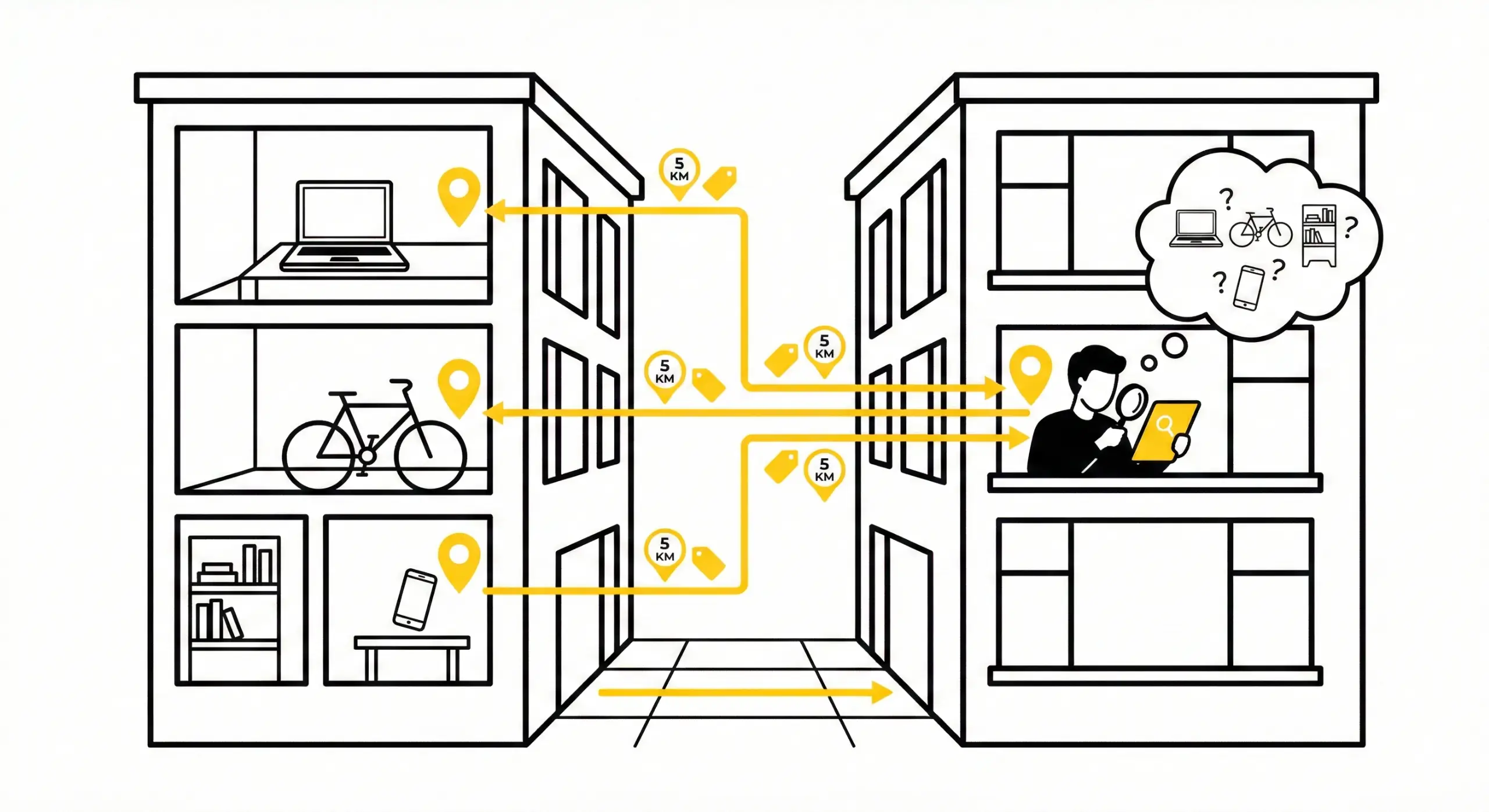


You’ve listed your old study table on Facebook Marketplace. Within an hour, you have 15 notifications. Most are “Is this available?” messages with no follow-up. Three people ask if you’ll deliver it 20 kilometres away. Two are clearly scammers. One genuine buyer gets lost in the chaos, and you accidentally miss their message.
Meanwhile, your friend listed similar furniture on a local classified platform and sold it in three days to someone from the same neighbourhood. Both are trying to help you sell locally, but the experience is vastly different. Facebook Marketplace has massive reach but comes with noise, distraction, and complexity.
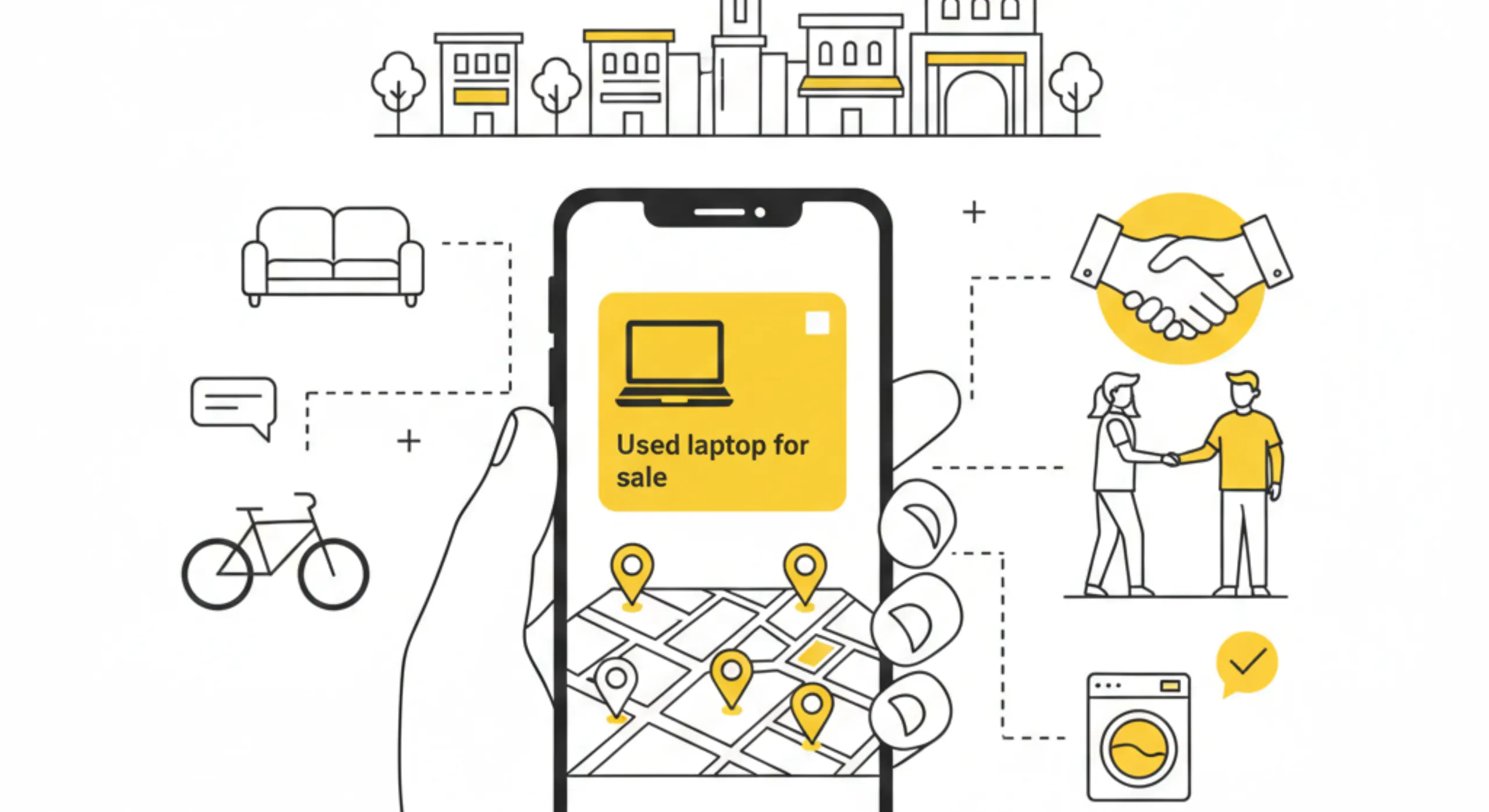
Dedicated local platforms and Sympl Classifieds focus specifically on connecting nearby buyers and sellers without the social media chaos.Understanding the differences helps you choose the right platform for what you’re selling.
How Facebook Marketplace Works
Facebook Marketplace is built into the Facebook app and website. It’s convenient because most people already have Facebook accounts.
Listing is easy: You can post items quickly with photos from your phone, set a price, and add your location.
Reach is broad: Your listing is visible to Facebook users in your area and sometimes beyond, depending on settings.
Communication happens through Messenger: All enquiries come as Facebook messages, mixing with your personal chats.
It’s free No listing fees or commissions for most categories.
Social layer exists: Buyers can see your Facebook profile, mutual friends, and activity, which can build trust or raise privacy concerns.The appeal is that it’s already where people spend time, so listing feels low-effort.
The Problems with Facebook Marketplace
Despite its convenience, Facebook Marketplace has specific challenges for serious buying and selling.
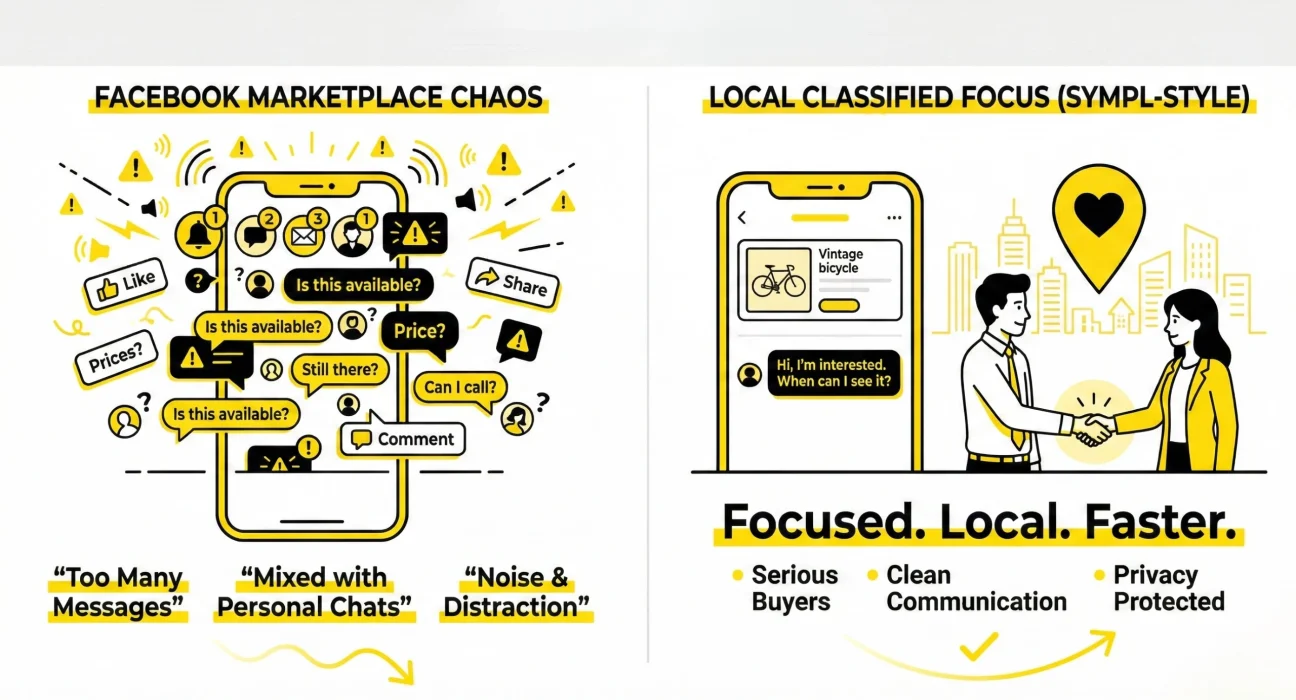
Overwhelming Notifications and Noise
Constant interruptions: Every enquiry, every comment, every question generates a notification. If you list multiple items, your phone buzzes non-stop.
Mixed with personal messages: Marketplace enquiries arrive in the same Messenger inbox as your family and friend chats. Important messages get buried.
“Is this available?” spam: You’ll get dozens of identical messages asking if the item is still available, with most never following up.
Distraction from social media: Opening Facebook to check buyer messages means seeing your feed, stories, and notifications – everything designed to keep you scrolling instead of focusing on the sale.
Privacy and Profile Visibility
Your profile is visible: Buyers can see your personal Facebook profile, your photos, where you work, your family – information many people prefer to keep separate from transactions.
Social pressure: If someone you vaguely know messages you about an item, declining or negotiating becomes awkward because of the social connection.
Safety concerns: Sharing your Facebook profile with strangers means they can see where you check in, what events you attend, and other personal details.
Quality of Enquiries
High volume, low quality: You get many messages, but most are not serious. People browse casually, asking vague questions, or making unrealistic offers.
Scammers are common: Fake payment confirmations, phishing attempts, and courier pickup scams thrive on Facebook Marketplace because it’s easy to create fake profiles.
Distance issues: People from far areas contact you without realizing you’re not offering delivery, wasting everyone’s time.
Interface Limitations
No dedicated seller tools: It’s a general social media platform adapted for selling, not purpose-built for transactions.
Search and filter issues: Buyers searching for specific items often struggle to find them among the clutter.
Limited categorization: Items get mixed together without clear organization, making it hard for the right buyers to discover your listing.These problems make Facebook Marketplace feel chaotic, especially if you’re selling multiple items or want a focused, efficient process.
How Dedicated Local Platforms Are Different
Platforms built specifically for local classifieds work differently because their entire purpose is facilitating local transactions.
Focused Environment
No social media distractions: You open the platform to buy or sell, not to scroll through feeds, watch videos, or check what friends posted.
Purpose-built interface: Everything is designed around listings, enquiries, and transactions nothing else.
Cleaner communication: Messages are about the transaction only. No mixing with personal life.
Privacy by Design
Profile separation: Your buying and selling activity isn’t connected to your personal social media, family photos, or work information.
Controlled information sharing: You decide what to share usually just a contact number or meeting location, not your entire life history.
Professional boundaries: Transactions feel more business-like because there’s no social pressure or mutual friend dynamics.
Better Buyer Quality
Serious users: People on dedicated platforms are there specifically to buy or sell, not casually browsing while procrastinating.
Geographic filtering. The platform naturally connects you with nearby buyers because that’s its entire focus, reducing irrelevant enquiries.
Less spam: Without the ease of fake profile creation that social media enables, scammers are less common.
Simplified Process
Straightforward listings: Post your item, set a price, add location. No algorithm deciding who sees it based on engagement or social connections.
Direct contact: Buyers reach out with genuine interest, not automated “is this available?” messages.
Transaction-focused: The entire experience is about getting the sale done efficiently, not maximizing your time on the platform.
This focus makes local classifieds faster and less frustrating for both buyers and sellers.
Real Comparison: Same Item, Different Platforms
A working professional in Bangalore decided to sell an office chair. He posted it on both Facebook Marketplace and Sympl to compare.
Facebook Marketplace:
- Posted on Monday morning
- By evening: 23 notifications
- Messages included: 12 “Is this available?” with no response after he replied, 4 people asking for delivery across the city, 2 obvious scam attempts with fake payment links, 3 lowball offers without seeing the chair, 2 genuine enquiries buried in the noise
- Time spent: Hours managing messages over three days
- Outcome: Overwhelmed, stopped responding. Item didn’t sell because he couldn’t manage the chaos.
Sympl (local classified platform):
- Posted Monday afternoon
- Over three days: 5 enquiries, all from his area
- Messages were specific: “I work from home and need a good chair. Can I come see it this weekend?” “Is the height adjustable? I’m in Koramangala too.”
- Met one buyer Saturday morning at a cafe. Buyer tested the chair, negotiated a small discount, and arranged pickup for Sunday.
- Time spent: Maybe 30 minutes total messaging, 20-minute meeting
- Outcome: Sale completed by Sunday evening
The difference in experience was dramatic.
When Facebook Marketplace Still Makes Sense
Despite its drawbacks, Facebook Marketplace has situations where it works.
Wide reach for niche items: If you’re selling something with limited local demand, vintage collectibles, specialized equipment, rare books, the broader audience helps.
When you’re already active on Facebook: If you’re comfortable with the platform and don’t mind the distractions, it’s convenient.
Free and familiar: There’s no learning curve if you already use Facebook daily.
Social trust factor: Sometimes seeing mutual friends with a buyer or seller adds confidence, especially in smaller communities.
Casual selling: If you’re not in a hurry and don’t mind managing lots of messages, it can eventually work.
But for most people selling everyday item furniture, electronics, appliances, bikes dedicated local platforms offer a better experience.
Why Sympl Classifieds Work Better for Most Items
Items like furniture, electronics, bikes, and appliances sell better on focused platforms.
Serious buyers: People browsing classifieds are actively looking to buy, not killing time on social media.
Geographic relevance: Local buyers and sellers understand pickup is expected, so you don’t waste time explaining you won’t deliver across the city.
Clear expectations: The platform’s entire purpose is local transactions, so everyone knows what to expect.
Less noise: Fewer but higher-quality enquiries mean you spend less time sorting through messages and more time closing deals.
Privacy maintained: Your personal life stays separate from your buying and selling activity.
For students selling books and electronics, families clearing out appliances, or working professionals upgrading furniture, Sympl classifieds deliver faster, cleaner results.
Practical Differences in Daily Use
Let’s break down what using each platform actually feels like.
Posting a Listing
Facebook Marketplace:
- Open Facebook (see notifications, friend requests, feed updates)
- Navigate to Marketplace section
- Create listing (might show to broader audience than you want)
- Get immediate notifications mixing with personal messages
Local Classified Platforms:
- Open the app (only buying/selling interface)
- Create listing with clear local focus
- Post and close the app
- Check back when convenient
The focused experience reduces distraction and stress.
Managing Enquiries
Facebook Marketplace:
- Enquiries mixed with personal Messenger chats
- Need to open Facebook to respond (get distracted by feed)
- Profile visible to every enquirer
- “Is this available?” spam requires constant replies
Local Classified Platforms:
- Enquiries in dedicated app space
- Open, respond, close – no distractions
- Share only what’s needed for the transaction
- Serious questions from genuine buyers
The separation keeps your personal and transaction lives distinct.
Meeting Buyers
Facebook Marketplace:
- Might recognize buyer from Facebook profile
- Social dynamic can complicate negotiation
- Privacy concerns if they can see your check-ins or location history
Local Classified Platforms:
- Professional, transaction-focused meeting
- No social pressure or awkwardness
- Privacy maintained throughout
The business-like nature often feels more comfortable.
Who Benefits Most from Each Platform
Different user groups find different platforms more suitable.
Facebook Marketplace Works Better For:
- People selling rare or niche items needing broader reach
- Those comfortable mixing social media with transactions
- Casual sellers not worried about efficiency
- Communities where Facebook use is universal and trusted
Local Classified Platforms Work Better For:
- Students who want quick, efficient sales without social media drama
- Families who value privacy and don’t want buyers seeing personal profiles
- Working professionals who want focused transactions without distraction
- First-time sellers overwhelmed by Facebook Marketplace noise
- Anyone selling items fast without managing dozens of low-quality enquiries
- Privacy-conscious users who separate personal life from transactions
Most people trying to sell everyday items efficiently fall into the second group.
Time and Mental Energy Saved
Beyond just selling speed, consider the mental load.
Facebook Marketplace:
- Constant notifications throughout the day
- Anxiety about who’s seeing your profile
- Distraction from social media mixing with selling
- Frustration sorting genuine buyers from spam
- Stress managing dozens of conversations
Local Classified Platforms:
- Check the app when convenient
- Privacy maintained
- Focused conversations with serious buyers
- Clear, straightforward process
- Less overall stress
The difference in mental energy expenditure is significant, especially if you’re selling multiple items or juggling work and family responsibilities.
Cost and Privacy: The Hidden Factors
Both platforms are free, but there are hidden costs.
Facebook Marketplace hidden costs:
- Privacy: Your profile is visible to strangers
- Time: Managing noise and distractions
- Security: More exposure to scams
- Mental energy: Constant notifications and mixed messaging
Local Classified Platforms:
- Privacy maintained by design
- Time saved through focused interactions
- Safer through purpose-built features
- Mental peace from separation of concerns
These factors matter more than people initially realize.
How Sympl Provides the Local Alternative
Sympl is designed specifically for straightforward local buying and selling. No social media integration means your personal life stays private. No feed to scroll, no distraction, just listings and enquiries.
The platform connects you with nearby buyers who are genuinely looking for what you’re selling. Communication stays focused on the transaction. You post, you connect, you sell. That’s the entire process simple, private, and efficient.
Making the Choice for Your Situation
Here’s how to decide which platform fits your needs.
Choose Facebook Marketplace if:
- You’re selling niche items needing broad reach
- You don’t mind social media mixing with transactions
- Privacy isn’t a major concern
- You’re comfortable managing high-volume, low-quality enquiries
- You have time to sort through noise
Choose local classified platforms if:
- You want to sell items fast without distraction
- Privacy matters to you
- You prefer focused, serious enquiries over high volume
- You’re selling everyday items with local demand
- You value efficient, straightforward transactions
- You want to separate personal social media from buying and selling
For most everyday items and most people, dedicated local platforms deliver better results with less stress.
Building Trust Without Social Profiles
One concern people have: “Don’t I need my Facebook profile for buyers to trust me?”
Not really. Trust in local buying and selling comes from:
- Meeting face-to-face in public places
- Letting buyers inspect items before paying
- Clear, honest communication
- Reasonable pricing
- Following through on commitments
A Facebook profile showing you have 500 friends doesn’t make you more trustworthy in a transaction. Your behaviour during the actual sale does.Local platforms build trust through transparency and proximity, not social media profiles.
Final Thoughts on Platform Choice
Facebook Marketplace and dedicated local classified platforms both help you buy and sell locally, but the experience is fundamentally different.Facebook offers reach but comes with noise, distraction, privacy concerns, and mixed-quality enquiries. It’s social media adapted for transactions, not built for them.
Local platforms like Sympl are purpose-built for straightforward buying and selling. They offer focus, privacy, and connection with serious nearby buyers without the chaos of social media.
For students, families, and working professionals trying to sell items fast while maintaining privacy and sanity, dedicated local classifieds offer the practical, efficient alternative.
It’s not about which platform is better in absolute terms, it’s about which one aligns with your needs. If you want efficient, focused transactions without your personal life mixed in, local classifieds work better. If you’re comfortable with the Facebook ecosystem and its trade-offs, Marketplace might suit you.
Most people, once they try both, prefer the simplicity and peace of platforms built specifically for local buying and selling. No feed to scroll, no profile to worry about, no notifications mixing with personal life, just practical transactions with nearby people who want what you’re selling.That’s what local classifieds deliver, and that’s why they work.