

The project started with confidence. The board approved a substantial budget for digital transformation. A respected vendor was selected through a rigorous evaluation process. Timelines were set. Governance structures were established. Leadership was aligned.
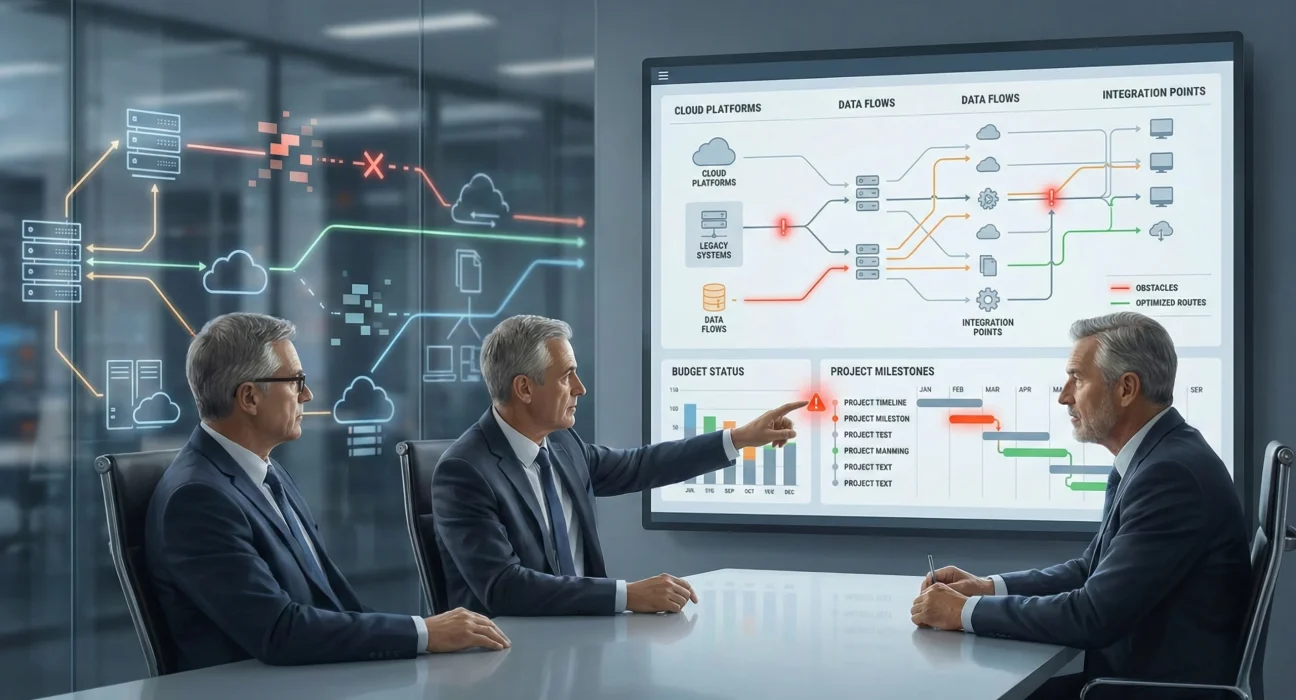
Eighteen months later, you’re in your third steering committee meeting discussing why the go-live date needs to move again. The original budget has been exceeded by 40%. Key stakeholders are frustrated. The vendor is pointing to scope changes and integration complexity. Your team is exhausted.
This pattern is so common in enterprise software projects that it almost feels inevitable. But it isn’t.
If you’re a C-level executive in a mid-to-large enterprise—particularly one navigating India’s complex business and regulatory environment—you’ve likely experienced these challenges firsthand. The question isn’t whether large-scale digital transformation is difficult. It is. The question is whether these difficulties are unpredictable acts of fate or predictable challenges that can be managed with the right approach.
This article examines the ten most common challenges in enterprise software projects, why they occur, and what actually works to address them. Not theoretical solutions, but practical approaches based on what separates successful programs from troubled ones.
Challenge 1: Unclear or Changing Requirements
The problem
Requirements seem clear when the project starts. Business stakeholders describe what they need. Analysts document these needs. Everyone signs off. Then, as development proceeds, the real complexity emerges.
“When we said real-time inventory visibility, we meant across all warehouses, including the third-party logistics providers, with adjustments for goods in transit, and different views for different user roles based on geography and business unit.”
The original requirement didn’t capture this complexity. Or business needs evolved as market conditions changed. Or stakeholders didn’t fully understand what they needed until they saw initial versions.
In Indian enterprises operating across diverse markets and regulatory environments, this challenge intensifies. Requirements that seem straightforward for one region turn out to have different needs in others. GST compliance requirements evolve. Customer expectations shift based on competitive offerings.
What actually works
The solution isn’t perfect requirements definition upfront—that’s impossible for complex enterprise systems. The solution is structured approaches to requirements evolution.
Start with business outcomes, not feature lists. Instead of “we need a customer portal with these 50 features,” articulate “we need to reduce customer service costs by 30% while improving customer satisfaction scores.” This clarity about what success looks like helps evaluate whether requirements are necessary or just nice-to-have.
Plan for requirements refinement. Rather than treating changing requirements as scope creep to be controlled, build structured refinement into your process. Regular prioritization reviews. Mechanisms for evaluating new requirements against business value. Authority to say no to changes that don’t serve strategic objectives.
Involve actual end users early and often. Business stakeholders describe what they think users need. Users describe what they actually need. These aren’t always the same. Programs that validate requirements with real users before building complete solutions avoid expensive rework.
Implement in phases that enable learning. Build core functionality first. Deploy it to limited users. Learn what actually works. Refine requirements for subsequent phases based on actual usage rather than assumptions. This approach costs less overall than building everything based on initial requirements that turn out to be incomplete.
Challenge 2: Stakeholder Alignment and Management
The problem
Enterprise software projects touch multiple business units, each with different priorities and perspectives. Sales wants customer-facing features. Operations need backend efficiency. Finance requires cost controls and reporting. Compliance demands regulatory features. IT is concerned about technical sustainability.
Getting initial alignment is difficult. Maintaining alignment as the project proceeds and trade-offs need to be made is harder. Different stakeholders have different definitions of success. What constitutes acceptable quality to one group seems inadequate to another.
The organizational politics are real. Some stakeholders have more influence than others. Some business units carry more political weight. Technical teams get caught between competing demands without authority to make final decisions.
What actually works
Effective stakeholder management starts with clear governance. Who makes final decisions when stakeholders disagree? What’s the escalation path when conflicts can’t be resolved at program level? These questions need answers before conflicts arise, not during them.
Create stakeholder tiers. Not everyone needs an equal voice in every decision. Some stakeholders are decision-makers for specific areas. Some are advisors. Some just need to be kept informed. Making these tiers explicit prevents the dysfunction where everyone expects veto power.
Communicate relentlessly. Most stakeholder problems stem from surprises. When stakeholders are informed consistently about progress, challenges, and decisions even when the news isn’t great they remain engaged. When they’re kept in the dark and then surprised with problems, relationships deteriorate.
Make trade-offs visible. When Feature A and Feature B both can’t be delivered in the same timeline, present the trade-off explicitly to decision-makers. “We can prioritize sales automation or customer service portal in Q2, but not both. Here’s the business impact of each. Which is more strategically important?” This transparency forces explicit choices rather than allowing implicit expectations that can’t be met.
Build trust through delivery. Stakeholders who see consistent progress and delivery become more patient with challenges. Those who see promises without results lose confidence quickly. Small, frequent deliveries that demonstrate tangible progress maintain stakeholder confidence better than lengthy development phases with no visible output.
Challenge 3: Integration with Legacy Systems
The problem
Most enterprise software projects aren’t greenfield development. They require integrating with existing systems, many of which are decades old, poorly documented, and maintained by people who’ve moved on.
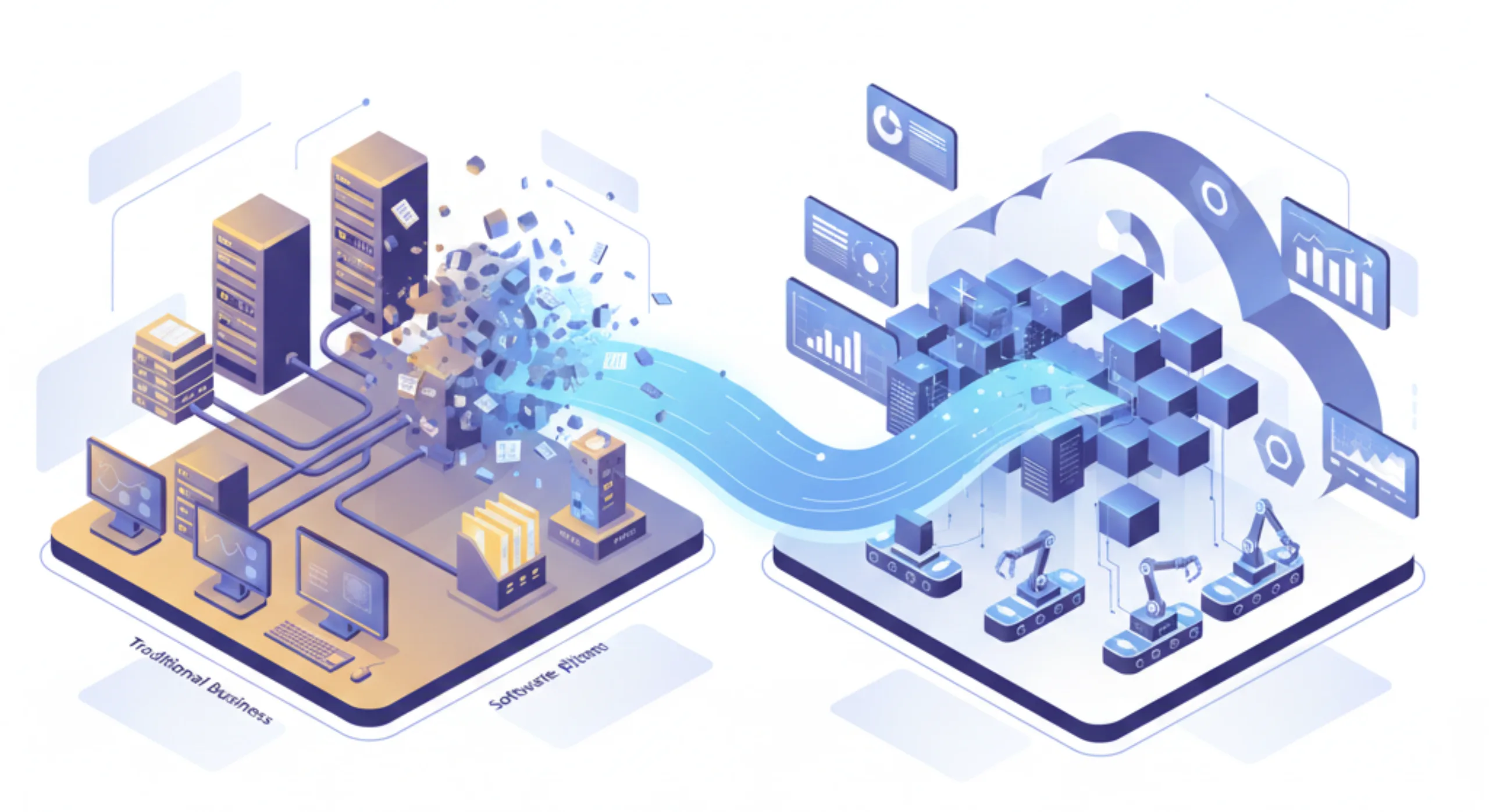
Your new customer platform needs customer data from the CRM system implemented in 2008. Transaction history from the core banking system running on mainframe technology. Product catalog from the ERP deployed fifteen years ago. Each integration is a separate complexity.
Legacy systems weren’t designed for integration. They have limited APIs. Data models don’t align with modern approaches. Performance characteristics make real-time integration challenging. Documentation is sparse or non-existent.
Indian enterprises face particular challenges here. Many are running hybrid environments with modern cloud applications alongside legacy systems that can’t be easily replaced due to regulatory, cost, or operational constraints.
What actually works
Start with integration architecture, not point-to-point connections. Each new system that integrates directly with every legacy system creates geometric complexity. An integration layer that standardizes how systems connect provides flexibility and reduces overall complexity.
Invest in understanding legacy systems before designing integrations. This means data profiling to understand what data actually exists versus what documentation says. Performance testing to understand response times and capacity. Working with people who know these systems to identify quirks and constraints.
Plan for data quality issues. Legacy systems often contain data that’s technically valid but practically unusable: duplicate records, inconsistent formats, historical artifacts from previous system migrations. Integration strategies need explicit data cleansing and reconciliation approaches.
Consider the strangler pattern for critical systems. Rather than big-bang replacement, gradually move functionality from legacy systems to new platforms while maintaining integration. This reduces risk and allows learning during migration.
Build integration monitoring from the start. Legacy system integrations will have issues. The question is how quickly you detect and respond to them. Integration monitoring that alerts on failures, performance degradation, or data quality problems is essential infrastructure, not a nice-to-have.
Challenge 4: Vendor Management and Coordination
The problem
Large enterprise programs typically involve multiple vendors: platform providers, system integrators, infrastructure vendors, specialized component providers. Each has their own contract, scope, timelines, and delivery approach.
Coordination challenges are inevitable. Vendor A’s deliverable is a dependency for Vendor B’s work. Integration testing requires both vendors’ systems to be ready simultaneously. Defects span vendor boundaries. Delays in one vendor’s scope impact everyone.
Then there are the contractual complexities. Change requests. Scope interpretation disagreements. Blame-shifting when things go wrong. Each vendor optimizes for their contract rather than overall program success.
What actually works
Treat vendor management as a core program capability, not an administrative function. This means dedicated leadership for vendor coordination with authority to make decisions and escalate issues.
Define integration points and responsibilities explicitly. Who builds the interface between System A and System B? Who tests it? Who’s responsible when it doesn’t work? These questions should have answers in contracts and be reinforced in program governance.
Create joint accountability mechanisms. Vendors naturally optimize for their contractual commitments. Create incentives aligned with program success: milestone payments tied to integrated capabilities rather than individual deliverables. Shared objectives that require vendor cooperation.
Establish regular vendor coordination forums. Not status meetings, but working sessions where vendors coordinate dependencies, resolve integration issues, and plan joint testing. When vendors only interact through program management, coordination suffers.
Build direct relationships with vendor technical leads. Contracts are managed through vendor account teams. But delivery happens through technical teams. Having direct relationships with the people actually doing the work improves coordination dramatically.
At Ozrit, we’ve found that programs with strong vendor governance frameworks—clear integration ownership, regular coordination, and joint accountability—experience far fewer vendor-related delays than those relying solely on contractual mechanisms.
Challenge 5: Budget Overruns and Cost Management
The problem
Enterprise software projects routinely exceed budgets. The reasons vary scope changes, complexity underestimation, integration challenges, vendor overruns but the pattern is consistent.
Initial budgets are often based on incomplete understanding of scope and complexity. As reality becomes clear, costs increase. Change requests accumulate. Testing takes longer than planned. Vendors discover work they didn’t account for.
For CFOs, this creates particular frustration. Technology projects seem uniquely unable to deliver within budget. The business case that justified investment assumes certain costs. When costs increase 30-40%, ROI calculations fall apart.
What actually works
Budget realism starts with honest estimation. Many programs are doomed by initial budgets that are optimistic rather than realistic. Better to get approval for accurate budgets than to get approval for low budgets that inevitably grow.
Include explicit contingency for unknowns. Enterprise programs always encounter unexpected complexity. Budgets that assume everything will go as planned guarantee overruns. Reasonable contingency (15-25% depending on program risk) acknowledges reality.
Track cost drivers, not just expenses. Understanding why costs are increasing helps determine if overruns are acceptable or concerning. Costs increasing due to valuable scope additions are different from costs increasing due to poor execution or vendor inefficiency.
Make cost visibility continuous. Quarterly financial reviews aren’t sufficient. Program leadership needs real-time visibility into spending against budget, committed costs for future work, and projected final costs. This allows early intervention when trends indicate problems.
Create approval gates for changes that impact the budget. Not bureaucratic controls that slow everything down, but explicit decision points where cost implications of changes are evaluated and approved by appropriate leadership before proceeding.
Evaluate vendor pricing models for alignment. Fixed-price contracts seem to transfer cost risk to vendors but often result in change order battles. Time-and-materials provides flexibility but unlimited cost exposure. The right model depends on scope clarity and risk profile.
Challenge 6: Timeline Delays and Schedule Management
The problem
If budget overruns are common, timeline delays are nearly universal. The go-live date slips once, then again. What was planned as an 18-month program stretches to 30 months.
Delays compound. When Phase 1 slips, Phase 2 can’t start on schedule. Dependencies cascade. Meanwhile, business pressures that drove the project urgency remain—regulatory deadlines, competitive threats, operational inefficiencies.
The reasons for delays vary: requirements took longer to finalize, integration was more complex than expected, testing found more issues than anticipated, key resources were unavailable, vendor deliverables were late.
What actually works
Set realistic timelines from the start. Many programs are set up to fail because leadership commits to dates before understanding what’s actually required. Pressure to deliver quickly is understandable, but impossible timelines guarantee delays and demoralize teams.
Build buffers into schedules for critical path activities. Integration, testing, data migration—these activities almost always take longer than planned. Schedules that assume best-case scenarios for critical activities guarantee slippage.
Track leading indicators of schedule risk. Don’t wait for missed milestones to know you’re behind schedule. Monitor velocity of requirements definition, defect resolution rates, integration testing progress. These indicators predict schedule problems before they become visible in milestone completion.
Make dependencies explicit and manage them actively. When Activity A can’t start until Activity B completes, that dependency needs visibility and management. Programs that track dependencies carefully can intervene when one delay threatens to cascade.
Create schedule transparency. When stakeholders understand why timelines are what they are, they’re more likely to accept them. When timelines seem arbitrary, pressure to compress them increases.
Be willing to reduce scope to preserve timeline when appropriate. Sometimes hitting a regulatory deadline or market window is more important than delivering every planned feature. Programs with authority to make scope-versus-schedule trade-offs have more options when delays threaten.
Challenge 7: Data Migration and Quality
The problem
Enterprise software projects often involve migrating data from old systems to new platforms. This sounds straightforward until you examine the actual data.
Customer records with duplicate entries and inconsistent formats. Transaction histories with gaps and anomalies. Reference data that’s been patched over years of workarounds. Master data spread across multiple systems with no clear source of truth.
Migrating this data isn’t just technical transfer, it’s data cleansing, reconciliation, and quality improvement. Organizations discover they don’t actually know what data they have or how good it is until migration forces confrontation with reality.
Data migration failures create serious business problems. Orders can’t be processed because product data is incomplete. Customer service suffers because account histories are inaccurate. Financial reporting breaks because transaction data doesn’t reconcile.
What actually works
Start data assessment early, not during migration execution. Profile data in source systems. Understand volumes, quality issues, and complexity. This assessment should inform project planning, not be a late discovery.
Create data quality rules explicitly. What constitutes valid customer data? How are duplicates identified? What do you do with incomplete records? These decisions need business input, not just technical solutions.
Plan for iterative data migration. Rather than one big-bang cutover, migrate data in phases: reference data first, then master data, then transactional data. This allows learning and refinement before full migration.
Build reconciliation processes. After migration, how do you verify data is complete and accurate? Reconciliation processes that compare source and target systems across multiple dimensions catch migration issues before they cause business problems.
Involve business stakeholders in data quality decisions. Technical teams can clean data formats but can’t make business decisions about which duplicate customer record is correct or how to handle incomplete order histories. These require business judgment.
Accept that perfect data migration is impossible. Some data quality issues will remain. The goal is good-enough data quality for business operations, not theoretical perfection.
Challenge 8: Change Management and User Adoption
The problem
The system works perfectly in testing. Features function as designed. Performance is acceptable. Security is validated. Then it deploys to production and users struggle.
The interface is different from what they’re used to. Workflows have changed. Reports look different. The features they relied on (even if they were workarounds) aren’t available. They need training but have limited time.
Resistance emerges. “The old system was fine.” “This is more complicated.” “I can’t find anything.” Usage is low. Workarounds proliferate. The business value you expected doesn’t materialize because users aren’t actually using the system effectively.
Indian enterprises face particular challenges with change management across diverse user populations: different digital literacy levels, different language preferences, different willingness to adopt new technology.
What actually works
Involve users in design, not just deployment. Users who participate in defining requirements and validating designs develop ownership. They become advocates rather than resistors.
Create role-based training that’s practical, not theoretical. Users don’t need to understand every feature they need to know how to do their specific jobs in the new system. Short, focused training for specific roles works better than comprehensive training on everything.
Provide support during transition. The first weeks after deployment are critical. Users need ready access to help: super-users who can answer questions, help desk support, quick reference guides. This support determines whether users persist through initial challenges or revert to old approaches.
Communicate the “why” consistently. When users understand why change is happening and what it means for them personally, adoption improves. Communication that focuses on benefits to users rather than organizational benefits resonates more.
Measure adoption, not just deployment. Deployment completion means the system is available. Adoption means users are actually using it effectively. Track usage metrics, monitor support tickets, watch for workarounds that indicate resistance.
Accept that behavior change takes time. Even well-designed change management doesn’t create instant adoption. Plan for gradual adoption curves and ongoing support rather than expecting immediate full utilization.
Challenge 9: Technical Debt and Long-Term Sustainability
The problem
The pressure to meet deadlines leads to compromises. “We’ll refactor that later.” “This integration is temporary until we rebuild it properly.” “The architecture isn’t ideal but it works for now.”
These compromises accumulate as technical debt. Later never comes because there’s always new features to build. Temporary solutions become permanent. Shortcuts compound.
Over time, the system becomes harder to maintain. Changes take longer to implement. Defects increase. Performance degrades. Adding new features requires working around existing problems. The technology that was supposed to enable business agility becomes a constraint.
What actually works
Make technical sustainability a requirement, not an afterthought. Architecture decisions should explicitly consider long-term maintainability, not just immediate functionality.
Allocate capacity for technical debt reduction. If all development capacity goes to new features, technical debt never gets addressed. Successful programs dedicate a percentage of capacity (typically 15-20%) to technical improvements, refactoring, and debt reduction.
Make technical debt visible to business leadership. When executives understand how technical shortcuts today create cost and risk tomorrow, they make different prioritization decisions. Technical debt should be quantified and reported like financial debt.
Choose technology partners who care about sustainability. Some vendors optimize for rapid feature delivery regardless of long-term consequences. Others balance delivery speed with sustainable architecture. Partners like Ozrit who position around delivery maturity rather than just development speed tend to produce more sustainable solutions.
Create architecture governance that prevents accumulation of new debt. Not bureaucratic approval processes, but lightweight review that ensures new development follows architectural principles and doesn’t create maintenance nightmares.
Challenge 10: Measuring and Demonstrating Value
The problem
The business case promised specific benefits: cost reduction, revenue increase, efficiency improvement, customer satisfaction gains. The system is deployed. Now you need to demonstrate that these benefits materialized.
But measuring actual value is difficult. Costs are easy to track—you know what was spent. Benefits are harder. Did customer satisfaction improve because of the new system or because of other initiatives? Did costs decrease due to automation or headcount changes? How do you isolate the system’s impact from other factors?
Meanwhile, the organization has moved on to other priorities. The focus that existed during implementation fades. Nobody maintains the discipline to track whether promised benefits actually occur.
What actually works
Define success metrics before implementation, not after. What specific measures indicate the system is delivering value? How will you measure them? What baseline exists for comparison? These questions need answers during planning, not during benefit realization attempts.
Track metrics consistently from baseline through post-deployment. You can’t demonstrate improvement without knowing the starting point and tracking continuously. This requires discipline and assigned responsibility metrics don’t track themselves.
Use metrics that business leaders care about. Technical metrics like system uptime or transaction throughput matter for operations but don’t demonstrate business value. Connect system capabilities to business outcomes: revenue, cost, customer metrics, operational efficiency.
Accept that value realization takes time. Most benefits don’t materialize immediately at deployment. User adoption takes time. Process changes need refinement. Full value often emerges 6-12 months post-deployment, not immediately.
Communicate value actively. Demonstrated success doesn’t communicate itself. Regular updates on how the system is delivering business value maintain stakeholder confidence and justify continued investment in enhancements.
Be honest when expected value doesn’t materialize. Sometimes systems don’t deliver promised benefits, usage is lower than expected, or processes don’t improve as much as projected. Acknowledging this honestly and adjusting approach is better than pretending success that stakeholders don’t see.
The Role of Leadership in Addressing These Challenges
None of these challenges can be solved purely through better project management or technology choices. They require leadership commitment and governance changes.
Setting realistic expectations
Many programs are set up to fail by unrealistic commitments made to boards or stakeholders before proper assessment. Leaders who take the time to understand complexity and set realistic expectations about timeline, cost, and scope create the foundation for success.
Making tough decisions
Enterprise programs require constant trade-offs: scope versus timeline, cost versus capability, risk versus schedule. These trade-offs need business leadership decision-making, not just technical team recommendations.
Maintaining consistent priority
Programs that succeed have consistent executive sponsorship throughout delivery, not just at approval and deployment. When priorities shift and leadership attention moves to other initiatives, programs struggle.
Choosing partners for execution maturity
Technology capability is necessary but insufficient. Programs need partners who understand enterprise execution challenges: governance complexity, stakeholder management, vendor coordination, change management.
Organizations evaluating technology partners should look beyond technical portfolios to program management maturity, delivery track record at scale, and experience navigating enterprise organizational complexity.
Moving Forward with Confidence
Enterprise software projects will always be challenging. Scale, complexity, stakeholder diversity, legacy constraints, regulatory requirements these realities won’t disappear.
But these challenges are manageable. Organizations that approach enterprise software delivery with appropriate governance, realistic expectations, strong execution discipline, and experienced partners navigate these challenges successfully.
The difference between programs that deliver value and those that struggle isn’t primarily about technology choices or technical capability. It’s about execution maturity: the ability to manage complexity, make tough trade-offs, coordinate across organizational boundaries, and maintain focus on business outcomes rather than just technical delivery.
As you plan your next large-scale digital transformation or evaluate current programs, the question isn’t whether you’ll face these challenges. You will. The question is whether you have the organizational maturity, governance structures, leadership commitment, and partner ecosystem to address them effectively.
That capability develops through experience, honest assessment of what works, and willingness to change approaches that aren’t delivering results. It requires recognizing that enterprise software delivery is as much about execution discipline and organizational coordination as it is about technology.
The organizations that successfully navigate complex IT programs are those that treat these challenges as manageable execution issues rather than unpredictable fate. They plan for them, govern for them, resource for them, and hold teams accountable for addressing them.
That’s the fundamental lesson: enterprise software project challenges are predictable and manageable. Success comes not from avoiding them that’s impossible but from addressing them systematically with appropriate leadership, governance, and execution maturity.