


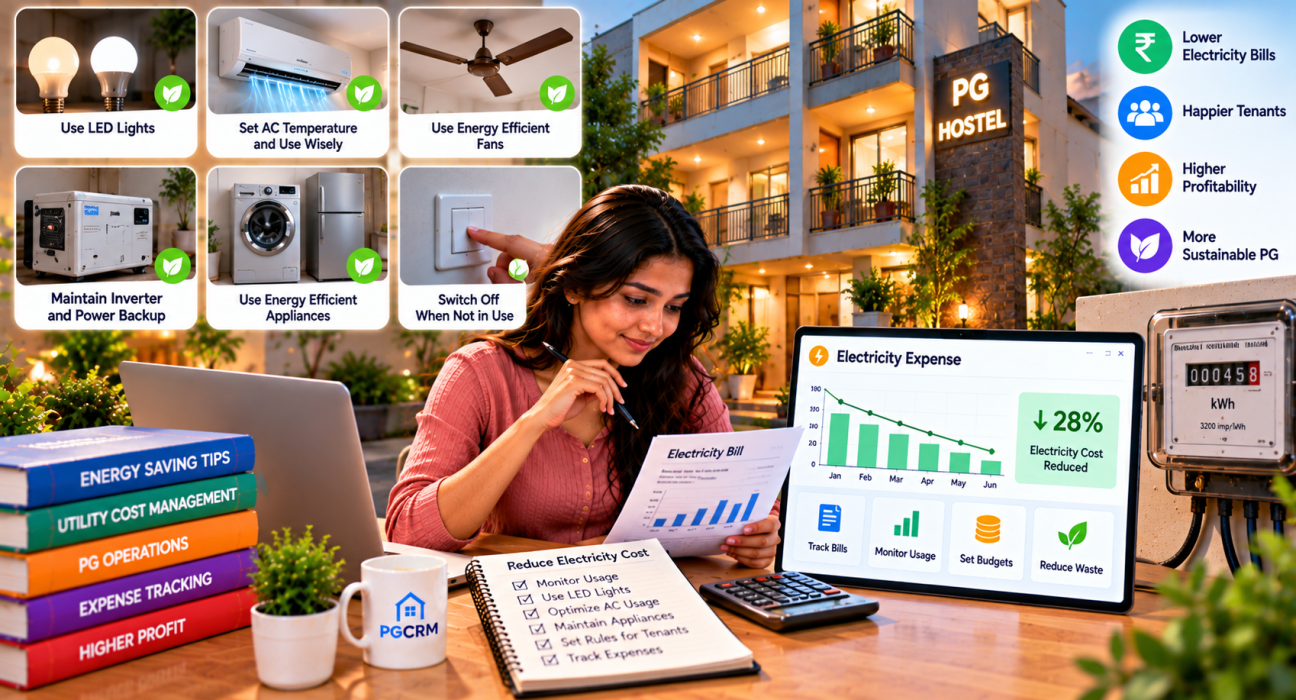
Introduction
Electricity is one of the few PG expenses that can quietly double on you. Rent is fixed and salaries are predictable, but the power bill moves with the weather, the number of geysers running at 6 a.m., and whether anyone remembered to switch off the corridor lights. Many owners only notice when the monthly bill lands and the margin looks thin.
Good PG electricity cost management is not about making tenants uncomfortable. It’s about knowing where the units go, fixing the big drains first, and choosing a billing method that feels fair. This guide walks through each step, with a simple monthly tracking method at the end. If you already use PG and hostel management software, you can keep these numbers next to your rent and occupancy records.
Why PG Electricity Bills Get Out of Control
A PG is different from a home. Dozens of people share one connection, and almost none of them see the bill. When nobody feels the cost, nobody saves.
The usual reasons bills climb:
- Common-area lights and fans running all day and night
- Geysers left on or used at the same peak hour
- ACs running with the door open or set very low
- Water pumps running longer than needed
- Old appliances that use far more power than newer ones
- Personal heaters, kettles and extra devices that tenants bring in
- No separate tracking, so you can’t tell which floor or area is the problem
Spotting which of these applies to you is the first job.
Step 1: Find Out Where the Power Is Going
Before buying anything, understand your usage. Here is a quick way to do it.
- Check how many meters you have. Some PGs run on one meter, others on several. Note which areas each meter covers.
- Collect the last six to twelve bills. Look for seasonal jumps and sudden spikes.
- Walk the building at different times. Go in the morning, afternoon and late night. See what’s switched on and who is using it.
- List your heavy appliances. Count geysers, ACs, water pumps, fridges, water dispensers, washing machines and any inverter or backup units.
- Estimate who uses what. Separate common-area use (corridors, stairs, pumps) from in-room use.
Check Your Tariff Category
Your electricity provider may classify your connection as domestic or commercial, and the per-unit rates can differ. Many PG owners never check this. Ask your electricity provider which category your PG falls under and what that means for your bill. Rules vary by state, so confirm directly with your local provider instead of relying on guesses.
Step 2: Fix Common-Area Waste First
Common areas are the easiest place to save because tenants aren’t affected much, and the changes are mostly one-time.
- Switch to LED lighting in corridors, stairs, washrooms and the entrance.
- Use timers or motion sensors for staircase and corridor lights.
- Turn off lights and fans in empty common areas. A simple “last person out switches off” rule works.
- Set a pump schedule. Run water pumps at fixed times instead of leaving them on, and fix leaking taps and overflow tanks so the pump doesn’t run for nothing.
- Label switches so people know what to turn off.
None of this is exciting, but these small leaks run every hour of every day.
Step 3: Tackle the Big Power Drains
A few appliances account for most of your bill. Focus here.
Geysers
Geysers use a lot of power, especially if they keep heating water that nobody uses.
- Fit a timer so geysers run only during morning and evening peak hours.
- Use thermostat-controlled models where possible.
- Insulate hot water pipes if you have long runs.
- Fix dripping hot taps. They make the geyser reheat again and again.
- If you’re building or renovating, compare central or solar water heating. The upfront cost is higher, so work out the payback before deciding.
Air conditioners
AC is usually the highest single cost in rooms that have it.
- Choose inverter ACs with a good BEE star rating when buying new. They usually cost more upfront but use less power to run.
- Get units serviced regularly. Dirty filters make the compressor work harder.
- Encourage a moderate temperature setting. Around 24–26°C is a commonly suggested range.
- Keep doors and windows shut when the AC is running.
- Consider an AC surcharge instead of hiding the cost in the base rent. More on that below.
Other appliances
Fridges, water dispensers and washing machines run all the time or all day. Replace old, inefficient units when they fail. Keep the washing machine in a shared area with set timings, so it doesn’t run at random hours.
Step 4: Choose a Fair Billing Method
This is where owners have the most room to manage costs. How you charge for electricity changes how tenants use it.
| Billing method | How it works | Good for | Watch out for |
|---|---|---|---|
| Included in rent | One rent covers everything. | Simple PGs with low usage | Tenants have no reason to save, and you absorb any rise. |
| Fixed monthly electricity charge | A set amount per bed or room | Predictable budgeting | Heavy users pay the same as light users. |
| AC surcharge | Extra monthly amount for AC rooms | PGs with a mix of AC and non-AC rooms | Needs to be clear at move-in |
| Sub-metre per room | Charges based on actual units used | Higher-usage rooms, single or small-group rooms | Needs meters, regular reading and clear rules |
A quick note: rules on charging tenants per unit differ across states, and some states regulate what rate you can charge. Check with your electricity provider or local authority before billing per unit.
A mix often works well. Keep a basic charge in the rent, and add an AC surcharge or sub-metering for rooms that use the most.
Step 5: Set House Rules Tenants Will Actually Follow
Rules only work if they’re clear and fair. A few tips:
- Explain at move-in. Give new tenants a short list of electricity rules and tell them how they’re billed.
- Keep the rules short. Five or six is plenty. For example: switch off lights and fans when leaving, keep AC doors closed, geyser timings and have no personal heaters or high-power appliances without permission.
- Put it in writing. A line in the rental agreement or a notice on the wall avoids arguments later.
- Explain the why. People accept rules more easily when they understand costs affect rent.
- Be consistent. If one tenant breaks a rule and nothing happens, the rest will follow.
Also give tenants a way to report faults. A tap that won’t close or a light that won’t switch off wastes power for days if nobody tells you. Logging these as complaints with a clear status helps you close them quickly.
Step 6: Track Your Electricity Cost Every Month
You can’t manage what you don’t measure. A simple monthly habit does more than any single upgrade.
Use cost per occupied bed
The total bill alone can mislead you. If your occupancy changes, the bill changes too. Compare it with the number of occupied beds.
Cost per occupied bed = monthly electricity bill ÷ number of occupied beds
Here’s an example with assumed figures:
| Month A | Month B | |
|---|---|---|
| Electricity bill | ₹42,000 | ₹38,000 |
| Occupied beds | 40 | 30 |
| Cost per occupied bed | ₹1,050 | About ₹1,267 |
The bill dropped in Month B, so it looks like good news. But each occupied bed now costs more to power. Without that second number, you’d miss it.
What to record each month
- The bill amount and the meter or building it belongs to
- Occupied beds that month
- Cost per occupied bed
- Any change you made (new geyser timer, new ACs, new rules)
- Any unusual event, such as summer heat or a long power cut
If you manage more than one building, record each building separately. Otherwise, a problem in one place hides inside the total.
This is where PG management software helps. With a tool like PGCRM, you can record expenses by category and building and view occupancy and expense reports. That lets you compare your electricity expense against how many beds were occupied each month. It won’t cut your bill for you, but it makes the pattern easy to see.
Common Mistakes in PG Electricity Cost Management
- Buying efficient appliances but ignoring habits. An inverter AC still wastes power if the door stays open.
- Hiding electricity inside the rent forever. It makes sense for small PGs, but it leaves you exposed when usage rises.
- Ignoring your tariff category. You can’t compare options without knowing what you’re paying per unit.
- Setting rules but never explaining them. People ignore rules that feel random.
- Looking only at the total bill. You need cost per bed to see the real trend.
- Skipping servicing. Neglected ACs, geysers and pumps cost more to run.
- Making changes without tracking results. If you can’t tell if a change worked, you can’t decide what to do next.
FAQ
How can I reduce electricity costs in my PG?
Start by finding where the power goes. Then fix common-area waste with LED lights and timers, control geyser and AC use, service appliances regularly, and choose a fair billing method. Finally, track your cost per occupied bed every month so you can see what’s working.
Should electricity be included in PG rent?
It depends on your PG. Including it keeps things simple, but tenants have no reason to save power and you absorb any increase. Many owners keep a base charge in the rent and add an AC surcharge or sub-meter charge for heavier users. Whatever you pick, explain it clearly at move-in.
Is it legal to charge tenants per unit of electricity?
Rules differ from state to state, and some states regulate the rate you can charge. Don’t assume. Check with your electricity provider or the relevant state authority before billing tenants per unit, and keep the arrangement in writing in the rental agreement.
How do I charge extra for AC in a PG?
The most common method is a fixed monthly AC surcharge for rooms that have one. Set the amount by estimating the extra power the AC uses and your servicing costs, and compare it with nearby PGs. Mention it clearly in the agreement so there are no surprises later.
What uses the most electricity in a PG?
Usually geysers, air conditioners and water pumps. Fridges, water dispensers and common-area lighting also add up because they run for long hours. Check your own PG by listing appliances and walking the building at different times of day.
How often should I review my electricity expenses?
Review them every month. Compare the bill with your occupied beds, note any changes you made, and watch for sudden jumps. A monthly check catches problems like a faulty appliance or a leaking tap early, before they cost you several months of extra units.
Conclusion
Strong PG electricity cost management comes down to a handful of habits. Find where the power goes, fix common-area waste, control the biggest appliances, bill in a way tenants understand, and review your cost per occupied bed each month. Small, steady changes add up.
Good records make that last step much easier. If you’d like rent, occupancy, complaints and expenses in one place, explore PGCRM to simplify your PG and hostel management.